
Rockwool Vapor Barrier Installation: The Orange County Owner’s Guide
Rockwool vapor barrier installation in Orange County typically runs $1.50 to $3.25 per square foot installed, with most attics in the 1,200 to 2,000 square foot range landing between $1,800 and $6,500 total. We stock Rockwool-compatible vapor barrier materials on our trucks and can usually complete the job same day or next day once we’ve assessed your attic. The catch for most Orange County homeowners is that they don’t discover the barrier failed until their energy bill spikes or they notice condensation on the underside of the roof decking during a Santa Ana-driven temperature swing.
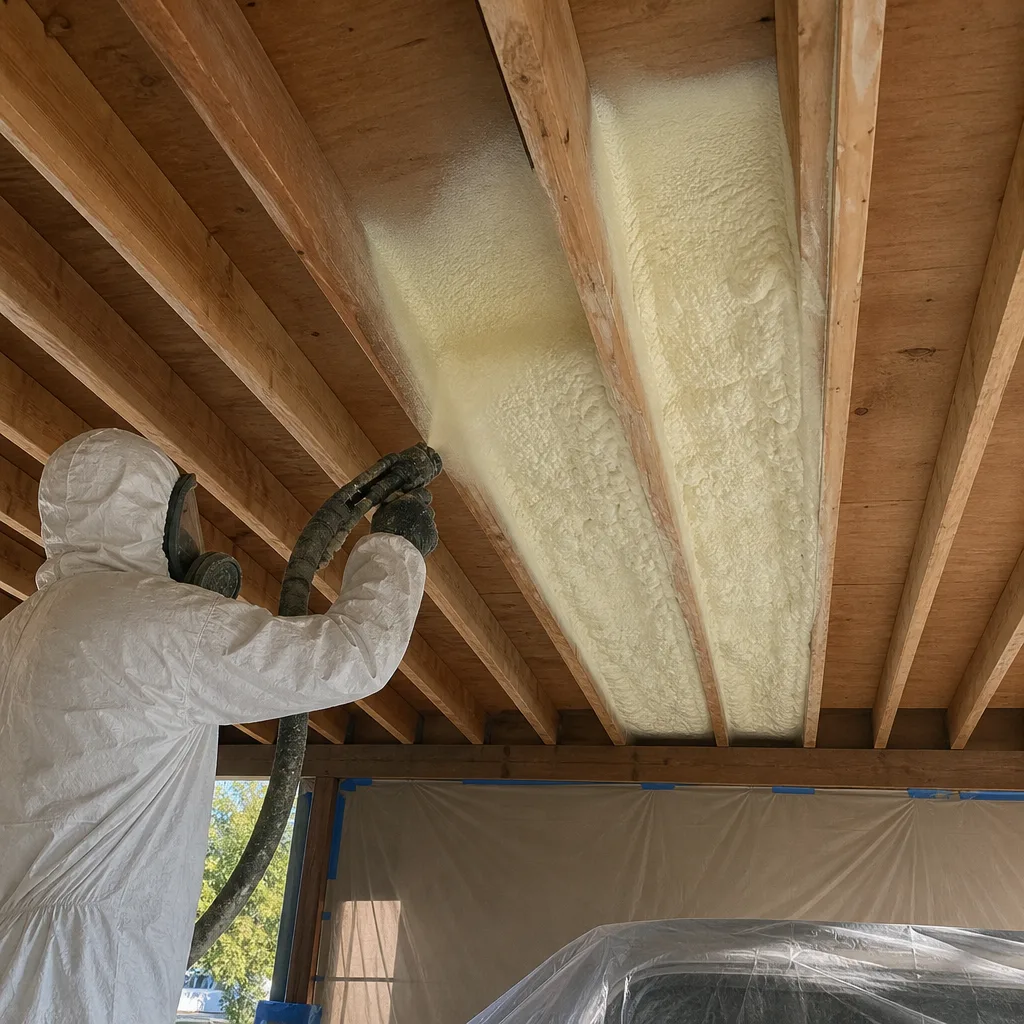
Here’s the scenario we see constantly: a homeowner had Rockwool batts or boards installed years ago, the original vapor barrier got torn during a roof repair or attic access, and now moisture is moving through the insulation layer. In coastal cities like Huntington Beach and Newport Beach, the marine layer keeps relative humidity high enough that a compromised barrier shows up as damp insulation within a season. Inland, in cities like Anaheim and Orange, the bigger tell is usually a jump in cooling costs because the insulation is no longer performing at spec.
If your attic is working against you, your AC never wins. That’s the reality of how vapor barriers function in this climate, and it’s why we treat this as a repair that matters, not an upsell.
Key Takeaways
- Installed Rockwool vapor barrier work in Orange County ranges from roughly $1,800 to $6,500 depending on attic size and access conditions.
- We carry Rockwool-compatible barrier materials on our trucks, so most jobs are same day or next day.
- The most common failure points are tears from foot traffic during unrelated attic work, and seam separation from temperature cycling.
- Rockwool stone wool does not rot or hold water, but the barrier facing can degrade, and that’s what you’re replacing.
- Every job gets a written price before work starts and is covered by our 365-Day Done Right Promise.
Which Rockwool Models This Applies To
This work applies to any Rockwool batt, board, or loose-fill application where a vapor barrier functions as part of the assembly. In Orange County homes, we most often see Rockwool Comfortbatt, Safe’n’Sound, and the older Roxul line that predates the 2017 rebrand. Comfortbatt R-15 and R-23 are the two most common products in exterior wall and attic knee wall applications here.
Here’s the compatibility detail most guides skip: Rockwool stone wool itself is vapor open, meaning it does not include an integrated vapor barrier on most products. The barrier is typically a separate polyethylene sheet or a facing membrane installed on the warm side of the assembly, and that membrane is what fails. So when we talk about “Rockwool vapor barrier installation,” we’re talking about the membrane system that protects the Rockwool, not a Rockwool-branded barrier product. Rockwool does not manufacture a proprietary vapor barrier film for residential use in the U.S. market.
What matters for compatibility is the assembly, not the brand. A 6-mil polyethylene barrier works identically whether the insulation behind it is Rockwool, Owens Corning, or Johns Manville. We stock 4-mil and 6-mil poly, plus reflective facings from Reflectix when the application calls for a radiant barrier hybrid in hot-climate attics. If you’re unsure what’s in your attic, look for the printed facing on the batt. Rockwool products carry a printed logo and product code on the facing. If it says Comfortbatt and the facing is torn, peeling, or missing entirely in sections, you’re looking at the repair we’re describing.
One Orange County-specific note: homes built before 2000 in Fullerton, Santa Ana, and Garden Grove often have original vapor barriers that were installed with the wrong orientation for our climate. In Southern California’s cooling-dominated load profile, the barrier should sit on the exterior side of the wall assembly in most cases, not the interior. We correct that when we do the work, and it’s a concrete difference you’ll feel in your summer cooling bill.
Signs Your Rockwool Vapor Barrier Installation Is Failing
- Condensation on attic surfaces during temperature swings. When a barrier tears, warm moist air from the living space migrates into the attic and hits cooler surfaces. Orange County’s winter mornings, especially in canyon areas like Silverado and Modjeska, produce visible condensation on roof decking and ductwork when the barrier is compromised.
- A sudden, unexplained rise in cooling costs. Rockwool loses effective R-value when moisture content climbs. A barrier failure lets humid air saturate the first inch of insulation, and that inch is where most of the thermal resistance lives. We see this in Irvine tract homes where occupants run the AC hard from July through October.
- Damp or darkened insulation at the top of the attic. Stone wool resists water absorption far better than fiberglass, but the surface can still appear darkened or matted when the barrier above it has failed. You’re looking for a visual difference between sections of the attic.
- Musty odor in upstairs rooms during humid weather. This is the symptom people notice first in coastal Orange County, especially in Laguna Niguel and San Clemente where the marine layer hangs around. The smell is not the Rockwool itself; it’s organic material in the attic absorbing moisture that should have been blocked.
- Visible tearing, sagging, or seam separation on the barrier membrane. If you can see the barrier and it’s drooping between joists, stapled seams have let go, or there are obvious puncture points, that’s the failure. It does not heal itself, and patching individual tears rarely holds because the surrounding material has lost tension.
Replacement Cost & What’s Included
For Orange County homes, installed Rockwool vapor barrier replacement runs $1.50 to $3.25 per square foot. The spread comes down to three things: attic height and access (a low-slope roof in a 1980s Mission Viejo tract home takes longer than a walkable attic in a newer Irvine build), whether the old barrier requires full removal or can be overlayed, and whether we find insulation damage that needs spot replacement while we’re in there.
Here’s the line-item breakdown so you know exactly what’s behind the number:
- Material (4-mil or 6-mil poly barrier): $0.15 to $0.35 per square foot.
- Labor including removal and disposal of old barrier: $0.90 to $1.80 per square foot.
- Seam tape, staples, and fasteners: $0.10 to $0.20 per square foot.
- Insulation spot repair if needed: $75 to $400 depending on how much Rockwool was compromised.
Every quote is written before any work starts. No surprises at the end. The 365-Day Done Right Promise covers the barrier installation for a full year, in writing, covering labor and materials. If a seam lets go or the barrier fails within that year, we return and fix it free. That’s the whole promise, no fine print exceptions.
Call (559) 249-4794 for an exact quote on your attic. The estimate is free and you’ll have the number in writing before you commit to anything.
DIY or Call Us?
Vapor barrier work is not high-tension and it’s not electrical, which makes it safer than a lot of attic work. What you can do yourself: inspect the barrier for visible tears, check for condensation on a cold morning, and look at whether the barrier is sitting flat or sagging. That’s diagnostically useful and it costs you nothing.
Where DIY goes sideways is the access and the details. Most Orange County attics have truss systems spaced 24 inches on center, and maneuvering through them with a 100-foot roll of poly while avoiding ductwork, electrical runs, and the occasional rodent nest is a full day of work for someone who does it weekly. The bigger issue is seam quality: a barrier with poorly taped seams is functionally no barrier at all. Moisture finds the gap every time. We also handle the disposal of the old barrier, which most homeowners underestimate until they’re trying to stuff 800 square feet of torn plastic into a residential bin.
If you’d rather have it done correctly the first time and covered by a written warranty, call (559) 249-4794. We’ll send a technician whose name and photo you’ll have before he shows up, and the price will be in your hand before any work begins.
How long does a Rockwool vapor barrier last in Orange County?
A properly installed 6-mil polyethylene vapor barrier in an Orange County attic typically lasts 20 to 30 years before material degradation becomes a factor, though physical damage from foot traffic or adjacent work is the more common reason for early failure. In our coastal cities, the sustained humidity of the marine layer can accelerate seam tape failure, especially on attic surfaces that experience direct sun exposure. Rockwool itself will outlast the barrier membrane in nearly every case, which is why we consider the barrier a replaceable component rather than a lifetime installation. If your home is 15 years old or more and you’ve never inspected the barrier, it’s worth a look. Call (559) 249-4794 and we’ll tell you honestly whether it needs work. Garrett Sloane has spent two decades in attics across Southern California and will tell you straight if yours does not need attention yet, which is not something every contractor will admit.
Can the existing vapor barrier be repaired instead of replaced?
Small tears under six inches can sometimes be patched with barrier tape, but in our experience, once a barrier has multiple tears or seam separation in more than one area, patching is a temporary fix. The original material has lost tension and the surrounding area will continue to fail. For Orange County attics with anything beyond a single isolated puncture, full replacement is usually more cost-effective than repeated patch trips. We’ll give you an honest assessment on the phone or during the estimate visit, and we’ll recommend whatever is actually in your best interest, not whatever pads the invoice. Estimates are free; call (559) 249-4794.
How long does the installation take?
Most Rockwool vapor barrier replacements in Orange County attics take 4 to 8 hours for a typical 1,500 square foot attic, and we can usually schedule within 24 to 48 hours of your call. Factors that add time include low-slope roofs, extensive old barrier removal, and attics with complex ductwork layouts where we’re working around obstacles every few feet. We’ll give you a time window when we schedule, and the technician will arrive within it, wearing a marked uniform and carrying a photo ID badge. You’ll know his name and see his photo before he rings the bell. Call (559) 249-4794 to schedule.
Do you stock Rockwool vapor barrier materials on the truck?
Yes, our trucks carry 4-mil and 6-mil polyethylene barrier in standard widths, seam tape, and fasteners, plus Reflectix reflective facing for hybrid applications. For most Orange County homes, we can complete the job in a single visit without waiting on a material order. The one exception is large custom applications, which we’ll identify during the estimate and order accordingly. We’re an independent service provider, not affiliated with Rockwool as a brand, but we source materials from eight industry-leading manufacturers including Rockwool, Owens Corning, and Johns Manville so the right product goes in for your specific attic. Call (559) 249-4794 and we’ll confirm what’s on the truck before we schedule your visit.
Written by Garrett Sloane, Owner, Aspen Attic Insulation Orange County at Aspen Attic Insulation Orange County, serving Orange County and nearby areas.