
Rockwool Crawl Space Encapsulation: The Orange County Owner’s Guide
We stock and install Rockwool-compatible crawl space encapsulation materials throughout Orange County, with typical installed jobs running between $1,800 and $4,600 depending on square footage and existing vapor barrier condition. Most encapsulation updates are completed in a single day, and we carry Rockwool Comfortboard and compatible vapor barrier materials on our trucks for same-visit replacement. The way most Orange County homeowners discover their encapsulation has failed: they smell musty air rising through the floor, see condensation on ductwork, or notice that their downstairs rooms never quite hold temperature the way the upstairs does.
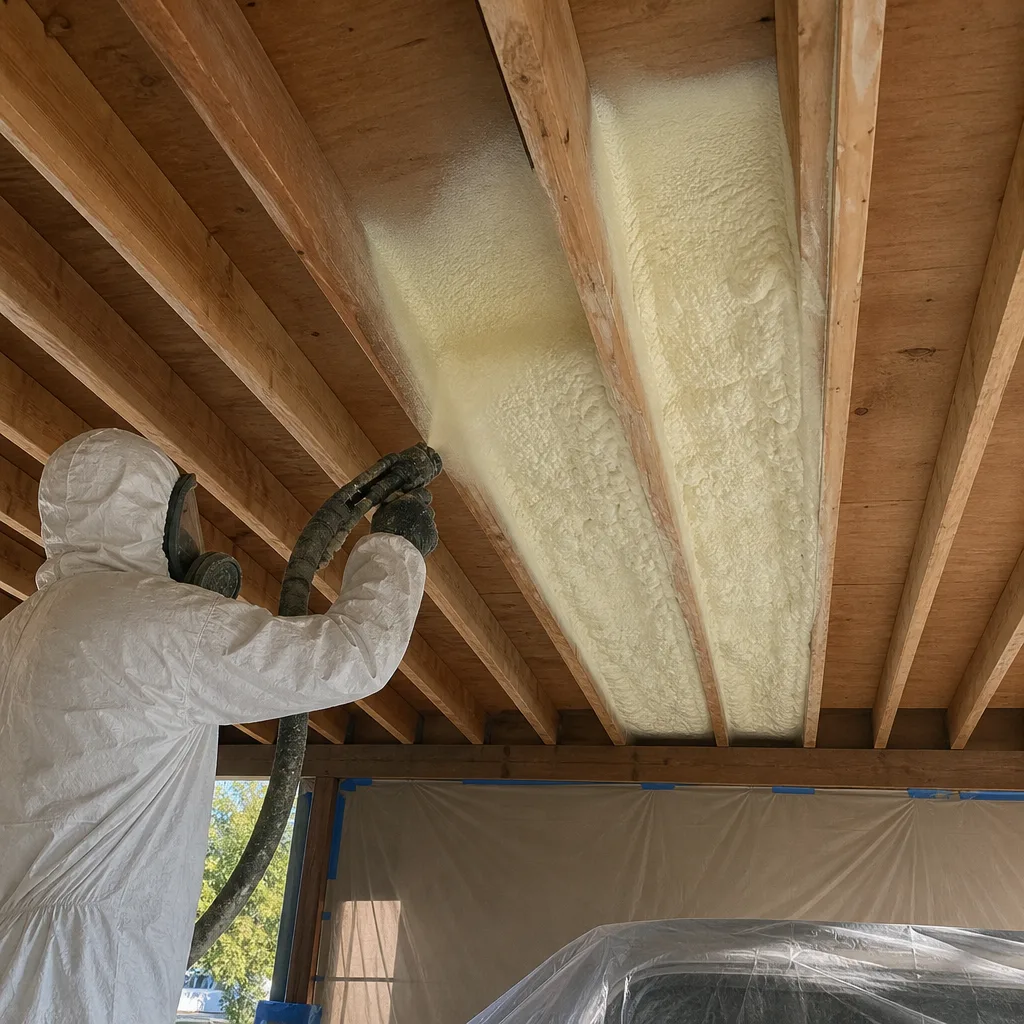
This page covers the Rockwool-specific side of crawl space encapsulation: which materials actually work in our coastal humidity, what fails first, what it costs, and whether you need a full encapsulation or just a targeted repair. If you’re already committed to Rockwool in your crawl space, you’ll get the exact compatibility details here that most insulation companies won’t tell you until they’re standing in your crawl space.
Which Rockwool Models This Applies To
In crawl space applications, Rockwool products fall into two families. The first is Rockwool Comfortboard 80, a rigid mineral wool board sold in 4′ x 2′ and 4′ x 4′ panels at thicknesses of 1″, 1.5″, 2″, and 3″. This is the product most Orange County encapsulation jobs use as a thermal break and moisture-resistant layer against crawl space walls. The second is Rockwool Safe’n’Sound, which is technically a soundproofing batt but often gets misapplied by other contractors as a wall cavity fill in crawl spaces. It absorbs moisture differently and is not rated for the damp conditions inside a vented crawl space in Orange County. If someone installed Safe’n’Sound in your crawl space walls, that’s likely the source of your failure.
The compatibility gotcha for Rockwool in Orange County: Comfortboard is hydrophobic, meaning it won’t wick water the way fiberglass does, but it still needs a properly sealed vapor barrier on the floor and up the walls to prevent moisture from passing around the edges. The board itself almost never fails. What fails around it is the tape, the mechanical fasteners holding it to the block or stem wall, or the vapor barrier it’s supposed to seal against. Aspen Attic Insulation Orange County stocks both Comfortboard 80 and compatible vapor barrier systems, and we’ll tell you up front whether there’s an OEM-class or premium aftermarket option that makes sense for your specific crawl space geometry. We’re an independent provider, not affiliated with Rockwool, but we’ve been installing their mineral wool products in Southern California for years.
Signs Your Rockwool Crawl Space Encapsulation Is Failing
- Musty smell that gets worse before rain or during Santa Ana winds. This usually means the vapor barrier has torn at a seam or pulled away from a wall, and moisture is coming up through the exposed soil. The Rockwool board itself will still look fine, which is why owners misdiagnose this as a drainage problem for months.
- Downstairs floors feel damp or cold in a specific room. If the encapsulation is intact, the floor above a crawl space should stay close to the indoor temperature. A localized cold spot means the ground vapor barrier has failed in that area and humid air is pooling directly under that section of subfloor.
- Condensation on the metal inside the crawl space, especially on ductwork or copper lines. A functioning encapsulation system should be keeping the crawl space dry enough that no condensation forms. If you see water beading on surfaces, the vapor barrier or the wall insulation system has lost its seal.
- Rockwool panels pulling away from the foundation walls. Rockwool Comfortboard is heavy, and if it was installed with too few mechanical fasteners, or with adhesive that degrades in humidity, the panels will sag or detach. When that happens, the thermal break is gone, and you’re heating and cooling the dirt under your house.
- Insulation that crumbles or feels caked when you touch it. Mineral wool does not rot like fiberglass, but if it was installed in direct contact with wet soil, or if the vapor barrier has been failing for more than a year, the board can become waterlogged and lose its R-value. Waterlogged Rockwool also holds weight against the wall fixings and accelerates panel detachment.
In Orange County specifically, we see a pattern in older tract homes from the 1960s and 1970s, places in Fountain Valley, Garden Grove, and Westminster, where the original crawl space never got more than a sheet of 6-mil poly thrown on the dirt. Owners upgrade to Rockwool and a sealed barrier, but the contractors who did the job never addressed the foundation vents. A sealed crawl space with open vents is the single fastest way to undermine Rockwool encapsulation in this climate. The summer humidity pushes in through those vents and gets trapped inside.
Replacement Cost & What’s Included
For Orange County homes, here’s the pricing reality we quote on the phone before anyone shows up:
| Job Type | Typical Price Range | What’s Covered |
|---|---|---|
| Targeted repair (torn vapor barrier, reseal seams, reattach panels) | $450 – $950 | Labor, replacement tape, fasteners, cleanup of affected area |
| Partial encapsulation (re-seal walls, replace floor barrier in half the crawl space) | $1,200 – $2,400 | Materials and labor for addressed zone, Rockwool board as needed |
| Full Rockwool encapsulation (vapor barrier, wall insulation, vent sealing) | $1,800 – $4,600 | Full crawl space coverage, vapor barrier, Rockwool Comfortboard, seam taping, vent treatment |
The range in Orange County depends on three things: how much of the existing Rockwool can be salvaged, how tall the crawl space is (tighter crawl spaces take more labor hours), and whether the original vapor barrier was ever properly taped or just lapped and left. We give a written price before any work starts, always, and it stays the price. The 365-Day Done Right Promise covers every repair for a full year in writing, including labor and materials. If something fails, we come back and fix it. No charge for the second visit.
DIY or Call Us?
You can safely inspect a crawl space from the entry point without getting all the way inside. Look at the visible vapor barrier, check whether the Rockwool boards are still tight against the wall, and note any obvious standing water or condensation. What you should not do is attempt to remove or reattach Rockwool panels that have come loose in a tight crawl space. Mineral wool board is dense and heavy, and working overhead or in a confined crawl space without a proper mask and head lamp is how homeowners get hurt or end up with a partial job that still leaks moisture. The crawl space also isn’t where you want to discover you’re allergic to something that’s been growing down there for a decade.
If you’ve got a failing encapsulation, call us at (559) 249-4794. We’ll ask you a few questions about your crawl space dimensions, what’s visible, and when you first noticed the smell or temperature issue. Then we’ll give you a straight answer about whether you need a full re-encapsulation or a targeted fix, and what it’ll cost before anyone steps onto your property.
FAQs
A properly installed Rockwool encapsulation system in Orange County lasts 20 to 30 years before the vapor barrier needs meaningful replacement, assuming the foundation vents were sealed at the same time. The Rockwool Comfortboard itself is essentially permanent. The weak points are the tape seams and fasteners, which typically need a touch-up or re-taping at the 7- to 10-year mark. If you’re noticing symptoms sooner than that, it’s usually an installation issue rather than a material failure. Call (559) 249-4794 and we’ll give you an honest read on what’s going on.
Most failing encapsulation jobs in Orange County can be repaired without removing all the Rockwool. If the boards are still intact and dry, we can remove the compromised vapor barrier, replace the fastening points, reseal the seams, and reinstall the same Rockwool. You only need full replacement if the mineral wool itself is waterlogged, falling apart, or if the original install was so incomplete that repairing it would cost more than starting fresh. We’ll tell you which one you’ve got before recommending anything.
Most targeted repairs and partial encapsulations take one day. Full crawl space encapsulations in Orange County typically run one to two days depending on access, crawl space height, and how much of the existing material is salvageable. We’ll give you a time window when we confirm your appointment, and we’ll send you the technician’s name and photo before anyone arrives so you know exactly who’s at your door.
We stock Rockwool Comfortboard and compatible encapsulation materials on our trucks, along with products from Owens Corning, Johns Manville, Knauf, CertainTeed, Icynene, Demilec, GreenFiber, and Reflectix for radiant barrier applications. That means we can usually repair your crawl space the same day we diagnose it. You won’t need to source, order, or store any materials yourself.
If your crawl space is working against your house, your HVAC system never wins. Call Aspen Attic Insulation Orange County at (559) 249-4794 for a free estimate. A live person answers, and you’ll get a written price before any work begins. We serve all of Orange County, from older Costa Mesa neighborhoods to new build communities in Irvine.
Written by Garrett Sloane, Owner, Aspen Attic Insulation Orange County at Aspen Attic Insulation Orange County, serving Orange County and nearby areas.