
Owens Corning Vapor Barrier Installation: The Orange County Owner’s Guide
Owens Corning vapor barrier installation in Orange County typically costs between $0.55 and $1.15 per square foot installed, with most single-family attic jobs landing between $900 and $2,800 depending on square footage, access, and whether we’re replacing existing barrier or installing new. We stock Owens Corning vapor barrier products on our trucks and can usually complete the work in a single visit, often same day or next day. Most Orange County homeowners discover their vapor barrier has failed when they see condensation on attic surfaces, notice a musty smell coming from the ceiling, or find their insulation has gone flat and damp in spots. The fix is straightforward once you know what you’re looking at.
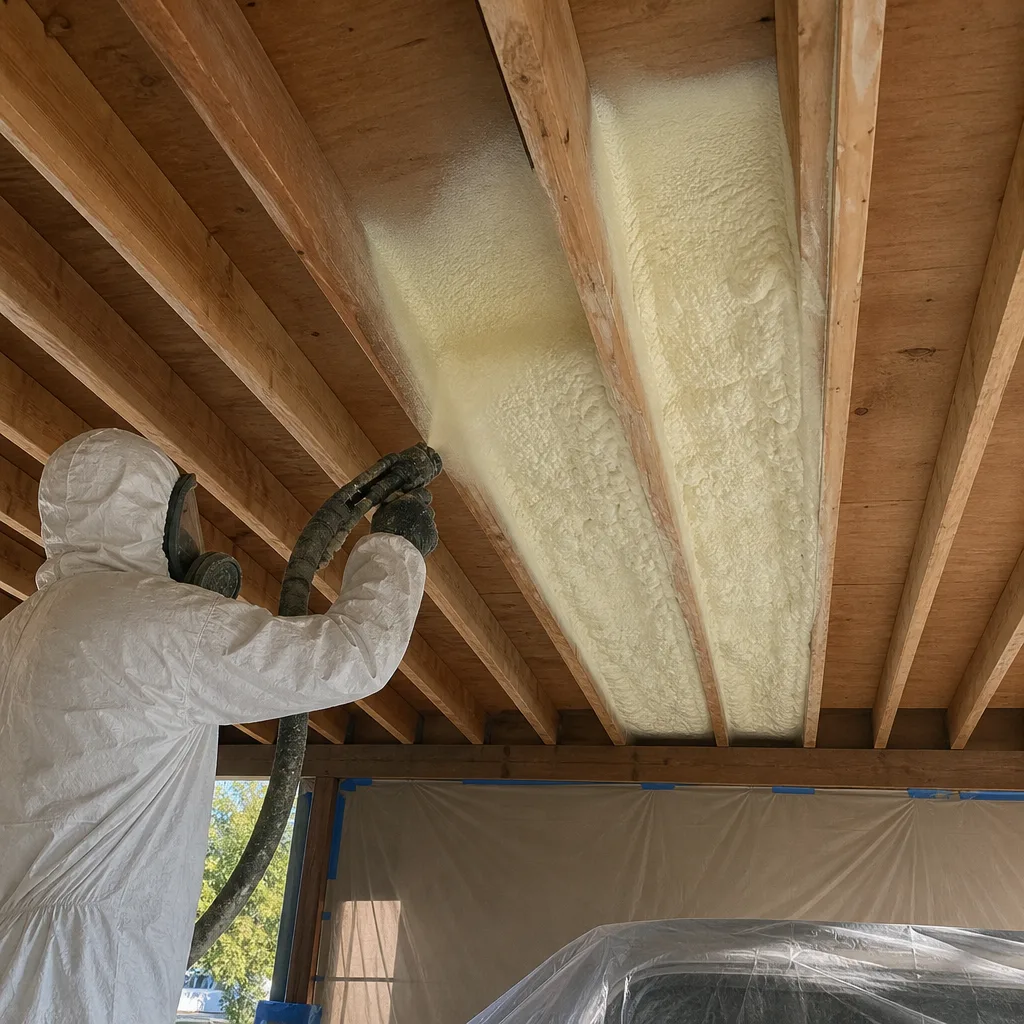
Here’s the thing about vapor barriers in Southern California: the climate works against them differently than in, say, Minnesota. We don’t get six months of frozen ground and the vapor drive that comes with it. We get marine layer humidity, coastal fog, and hot attic air meeting cool conditioned spaces. That’s a different kind of moisture problem, and it means the barrier’s job here is less about keeping frost out and more about managing humidity migration through drywall into insulation. Fail to catch it early and you’re looking at mold, degraded insulation R-value, and higher energy bills. Catch it at the first sign of condensation and it’s a one-day fix.
Which Owens Corning Models This Applies To
We install Owens Corning vapor barrier products across their residential insulation lineup, including EcoTouch and the Owens Corning Atticat blown-in system. The vapor barrier itself comes in a few forms: foil-faced kraft paper, poly sheet, and the foil facing on Owens Corning batt insulation. If you have Owens Corning batt insulation with a kraft or foil facing, that facing is the vapor barrier, and it’s typically installed facing the conditioned side of the home (toward the drywall). If the facing is on the wrong side, or has torn away from the batts, that’s a failure point.
One compatibility gotcha we see regularly in Orange County: homeowners or previous contractors install faced batts on top of existing faced batts in the attic. That creates a double vapor barrier, which traps moisture between the two facings and causes exactly the problem the barrier was supposed to prevent. If you’re re-insulating over existing material, the new batts should be unfaced, or the old facing needs to be removed or slashed. Owens Corning makes both faced and unfaced versions for this reason. We match what goes in to what’s already there. If you’re not sure which you have, a quick attic photo sent to us is usually enough to tell.
On the OEM-versus-aftermarket question: we use genuine Owens Corning vapor barrier products because the spec matters. The perm rating (how much moisture passes through) is engineered to work with their insulation’s density and R-value. A generic poly sheet from a hardware store might be cheaper, but it changes how your insulation performs. For a house in Irvine or Huntington Beach dealing with ocean-adjacent humidity, that matters more than it does in, say, Yucaipa. We also stock Reflectix as an alternative radiant barrier product when the job calls for it, but for Owens Corning systems specifically, we stay with Owens Corning.
Signs Your Owens Corning Vapor Barrier Installation Is Failing
- Condensation or water stains on attic sheathing or rafters. This is the classic first sign. Warm, moist air from the living space is moving through the ceiling, hitting the barrier, and condensing where it shouldn’t. If you see dark staining or actual water droplets on the underside of your roof deck, the barrier is compromised or installed incorrectly.
- Damp, matted, or compressed insulation. Insulation that should be fluffy and full R-value will look flat, clumpy, or feel damp to the touch. Wet insulation loses most of its thermal resistance, and once it’s matted from moisture, it doesn’t bounce back. That’s a vapor barrier failure letting moisture soak into the batt.
- Musty or earthy smell in living areas below the attic. If your hallway or bedroom ceiling area smells like a basement that doesn’t belong in Southern California, you probably have moisture trapped in the attic insulation. That smell travels down through outlet boxes and light fixtures.
- Torn, sagging, or pulled-away facing on batt insulation. In an unfinished attic, you can see this directly. The kraft paper or foil facing should be intact and taut against the insulation. If it’s peeled back, stapled badly, or hanging loose, the moisture barrier function is gone.
- Unexplained spike in cooling costs during humid months. Orange County humidity creeps in from June through September. If your AC is running harder than it used to without a change in thermostat setting, damp insulation with reduced R-value is a prime suspect. The barrier failed, the insulation got wet, and now your system is fighting a losing battle.
Replacement Cost & What’s Included
Here’s the honest pricing picture for Orange County. Basic vapor barrier replacement over existing insulation in an accessible attic runs $0.55 to $0.75 per square foot. If the existing facing is torn and we need to remove and dispose of old material first, that pushes the range to $0.80 to $1.15 per square foot. For a typical 1,800-square-foot attic footprint, that means roughly $1,000 to $2,100. If we’re also replacing water-damaged insulation, that’s a separate line item, and we price it before any work starts.
Every quote includes removal and disposal of failed material, new Owens Corning vapor barrier installed to the correct spec, and a written price delivered before we touch anything. The work is covered by our 365-Day Done Right Promise: if it’s not right, we make it right, in writing, covering labor and materials for a full year. A live person answers our phone 24/7 at (559) 249-4794, and when you call, you’ll get a straight answer on whether we can get to you today or tomorrow, not a recording. Garrett Sloane has been crawling through Orange County attics long enough to know that a surprise bill is the last thing you should deal with after a moisture problem.
DIY or Call Us?
Vapor barrier work sits in an odd middle ground for DIY. It’s not high-tension dangerous like garage door springs or electrical panels, but doing it wrong creates a problem you can’t see until it’s already damaging your house. What you can do safely: go into the attic on a cool morning with a flashlight, check for the signs we listed above, and take photos. That’s genuinely useful. If you know your way around, you can also re-staple loose kraft facing that’s still intact, as long as you’re wearing gloves, a dust mask, and you stay on the joists, never on the drywall below.
Where DIY goes wrong is the part you can’t see. Installing a new poly barrier over the wrong insulation type, creating a double barrier, or using the wrong perm-rated material traps moisture inside the insulation cavity. In Orange County’s humid summer months, that trapped moisture breeds mold inside your attic in a matter of weeks. You won’t know until the smell reaches your living room. We’re not going to tell you this is rocket science, but we will tell you it’s the kind of job where the mistake lives behind the drywall until it’s expensive. If you want it done once, call (559) 249-4794 and we’ll send a technician whose name and photo you’ll have before they pull into your driveway.
FAQs
An Owens Corning vapor barrier installed correctly in a Southern California attic typically lasts 20 to 30 years before the facing degrades, but humid coastal areas like Laguna Beach or Newport Beach can shorten that to 15 to 20 years. The insulation itself often outlives the facing, which is why we see replacement jobs where the batts are fine but the barrier has torn or delaminated. Call us at (559) 249-4794 if your attic is 15-plus years old and you want an honest assessment.
Yes, small tears and loose areas can usually be repaired with vapor barrier tape or re-stapling if the surrounding material is still intact and the insulation underneath is dry. That’s a $150 to $400 job in most Orange County attics. But if the facing is brittle, delaminating, or the insulation underneath is damp, a patch job just buys you time before the same problem returns. We’ll tell you which one you’ve got, and we’ll show you photos from the attic before recommending any work.
Most single-family vapor barrier replacements in Orange County are completed in 4 to 8 hours, including removal of failed material and cleanup. Bigger homes or attics with difficult access can push into a second day. We’ll give you a time window when you book, and the technician who shows up will be the person you were told to expect, name and photo sent beforehand.
We stock Owens Corning vapor barrier products on our trucks, along with materials from Johns Manville, Knauf, Rockwool, CertainTeed, Icynene, Demilec, and GreenFiber. For most standard attic jobs, we have the right product on hand the day we arrive. If your attic needs something unusual, there’s no fake “we have to order it” delay, we’ll tell you the truth about timing before we start.
Written by Garrett Sloane, Owner, Aspen Attic Insulation Orange County at Aspen Attic Insulation Orange County, serving Orange County and nearby areas.