
Knauf Vapor Barrier Installation: The Orange County Owner’s Guide
Knauf vapor barrier installation in Orange County typically runs $1.50 to $3.25 per square foot installed, with most attics in the 1,200 to 2,400 square foot range landing between $2,200 and $6,800 total. We stock Knauf-compatible vapor barrier rolls on our trucks and can usually complete a standard attic install the same day we arrive. Most Orange County homeowners discover their vapor barrier has failed when they climb into the attic and see condensation on the underside of the roof deck, or when upstairs rooms develop a persistent musty smell during our humid coastal swings.
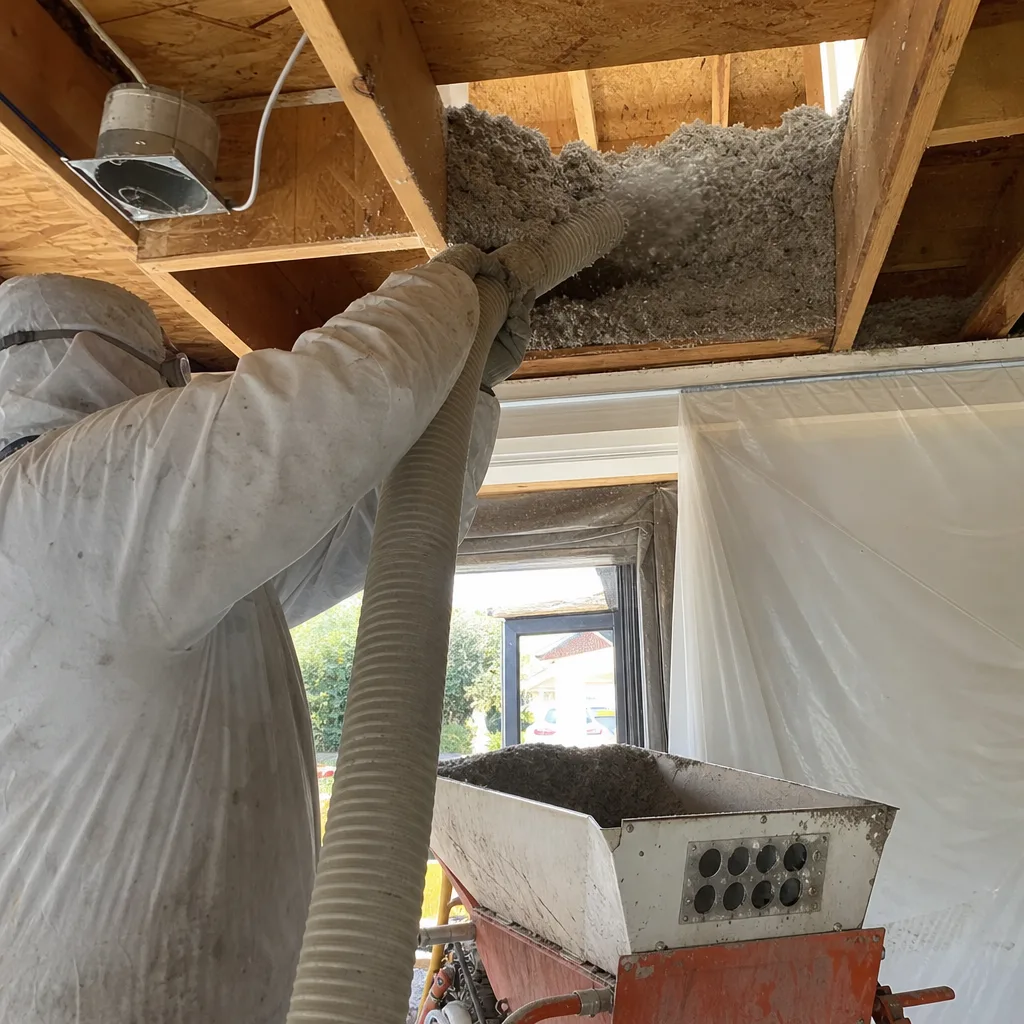
What we see most often in Irvine, Huntington Beach, and Mission Viejo is a polyethylene barrier that was stapled poorly or torn during a previous insulation upgrade. It sits there looking fine from six feet away, but it’s not doing its job. That’s when the problems compound: moisture gets into the insulation, R-value drops, and your AC works harder against air that should be sealed out.
If your attic is working against you, your AC never wins. We’ll show you exactly what’s failing, what it costs to fix, and who’s showing up to do the work before you commit to anything.
Which Knauf Models This Applies To
Knauf manufactures vapor barriers and vapor retarders under their Insulation and Building Products lines, and the compatibility question comes down to which one you have. The Knauf EcoBatt and Knauf Jet Stream product families are the most common in Orange County attics, and each pairs with a different barrier class. EcoBatt fiberglass batts, which include a kraft facing on some models, typically call for a Class II vapor retarder on the warm side of the insulation. Jet Stream blown-in fiberglass systems, which we install frequently, work with either a Class I polyethylene barrier or a smart vapor retarder like Knauf’s VaporSeal line, depending on your attic’s ventilation profile.
Here’s the compatibility gotcha we run into constantly: not every attic in Orange County needs a full vapor barrier at all. A home three miles from the coast in Laguna Niguel has a different moisture profile than one in inland Anaheim Hills. Installing a Class I poly barrier in a home that should have a breathable retarder traps moisture inside the wall or ceiling cavity, and that’s how you end up with mold that costs five figures to remediate. Garrett Sloane has pulled apart enough of these to tell you honestly whether your attic needs a barrier, a retarder, or nothing beyond what’s already there. That assessment is free, and it’s the difference between a targeted repair and a $6,000 mistake.
Aspen Attic Insulation is an independent service provider, not affiliated with Knauf. We stock genuine Knauf-compatible products alongside equivalents from Reflectix and other brands we trust, and we’ll tell you which is the better fit for your specific home before you spend a dollar.
Signs Your Knauf Vapor Barrier Installation Is Failing
- Condensation or water staining on the underside of the roof deck. This is the classic tell in Orange County, especially after our June gloom months. A failed barrier lets warm, moist air rise from the living space into the attic where it hits the cooler roof sheathing and condenses. Left alone, that turns into wood rot and rust on exposed fasteners.
- Rust forming on exposed nails, duct straps, or plumbing hangers in the attic. Rust means moisture is present. If you see orange streaking on the metal in your attic, the vapor barrier is either torn, improperly sealed at the seams, or simply not present where it should be.
- A persistent musty or “old house” smell in upstairs rooms. That smell is microbial growth feeding on damp insulation. When the vapor barrier fails, the insulation itself becomes a moisture sponge, and fiberglass holds that water against the drywall for months.
- Peeling paint or efflorescence on upper floor ceilings. White, chalky residue or bubbling ceiling paint means moisture is being driven down through the ceiling cavity. The barrier’s job was to stop that migration, and it’s not holding.
- Your upstairs feels impossible to cool in summer or heat evenly in winter. A vapor barrier that’s torn or sagging creates air gaps, and air gaps let conditioned air escape. You feel the result as temperature swings and a bill that climbs every July.
Replacement Cost & What’s Included
Installed Knauf vapor barrier replacement in Orange County generally falls between $1.50 and $3.25 per square foot. The spread comes down to three things: the type of barrier or retarder your house needs, how much of the existing insulation has to be moved or replaced, and whether we’re dealing with an open attic or a cramped space with limited access. A clean, unobstructed 1,500 square foot attic over a garage in Rancho Santa Margarita is at the low end. A tight, low-slope attic in an older Fullerton bungalow with ducts everywhere is going to land higher.
| What You’re Paying For | Typical Orange County Range |
|---|---|
| Vapor barrier material (Knauf-compatible poly or retarder) | $0.35 – $0.75 / sq ft |
| Labor (removal of old, install of new, seam sealing) | $1.15 – $2.50 / sq ft |
| Disposal of failed barrier and any moisture-damaged insulation | $150 – $400 flat |
| Total installed (typical OC attic) | $2,200 – $6,800 |
Every quote we write in Orange County includes the full scope: materials, labor, disposal, and a written price you approve before we start. No add-ons. No “while we’re in there” upsells. The work is covered by our 365-Day Done Right Promise in writing, and if something fails within a year, we come back and fix it at no charge. That includes both labor and materials.
DIY or Call Us?
You can safely check a few things yourself before you call anyone. Look in the attic for visible tears, gaps around plumbing penetrations, or staples that have pulled loose. Take a photo or two. That’s information we can use to give you a rough idea over the phone.
What you should not do is crawl across an unfinished attic with nothing but dim lighting and a staple gun in your pocket. One misplaced step through a drywall ceiling and you’re looking at a hospital bill that makes a new vapor barrier feel free. We’ve also seen homeowners buy the wrong class of barrier from a big box store and wrap their attic in a moisture trap. That’s the expensive kind of DIY. We’re glad to walk through the option with you over the phone and be honest about whether it’s worth hiring us or whether you can handle it with the right materials and some patience. Call (559) 249-4794 and we’ll help you figure that out.
FAQs
A properly installed Knauf vapor barrier or retarder should last 15 to 25 years in Orange County’s climate, with the lifespan shortened by poor attic ventilation, roof leaks, or pest activity. Homes within a few miles of the ocean in places like Newport Beach and San Clemente see more salt air and humidity, which can accelerate degradation at the seams.
Small tears and punctures in a Knauf vapor barrier can often be repaired with compatible tape or a patched section, which typically costs a few hundred dollars in Orange County. If the barrier is sagging, pulling away from the framing, or deteriorated from age, a full replacement is usually the better investment. Call (559) 249-4794 and we’ll help you determine which route makes sense before you spend anything.
Most Knauf vapor barrier installation jobs in Orange County are completed in a single day, usually 4 to 8 hours. Larger attics or jobs that require removing and reinstalling ductwork can take a second day, but we’ll tell you the expected timeline in writing before the work starts.
Yes, our trucks carry Knauf-compatible vapor barrier material and commonly needed tape, fasteners, and replacement sections, so most jobs can be completed during the first visit. If your attic requires a specialty retarder or an uncommon width, we’ll source it and reschedule, and you’ll know the plan before we leave.
Written by Garrett Sloane, Owner, Aspen Attic Insulation Orange County, serving Orange County and nearby areas.