
Knauf Radiant Barrier Installation: The Orange County Owner’s Guide
Knauf radiant barrier installation in Orange County typically runs $1.85 to $3.10 per square foot installed, with most attics in Irvine, Anaheim, and Fullerton landing between $1,400 and $2,800 total depending on roof pitch and access. We stock Knauf-compatible radiant barrier rolls on our trucks, and in most Orange County homes we can complete the install same day. Most homeowners call us after noticing their upstairs rooms won’t hold temperature, or after a roofer or pest inspector points out that the old foil has torn, delaminated, or fallen away from the rafters entirely.
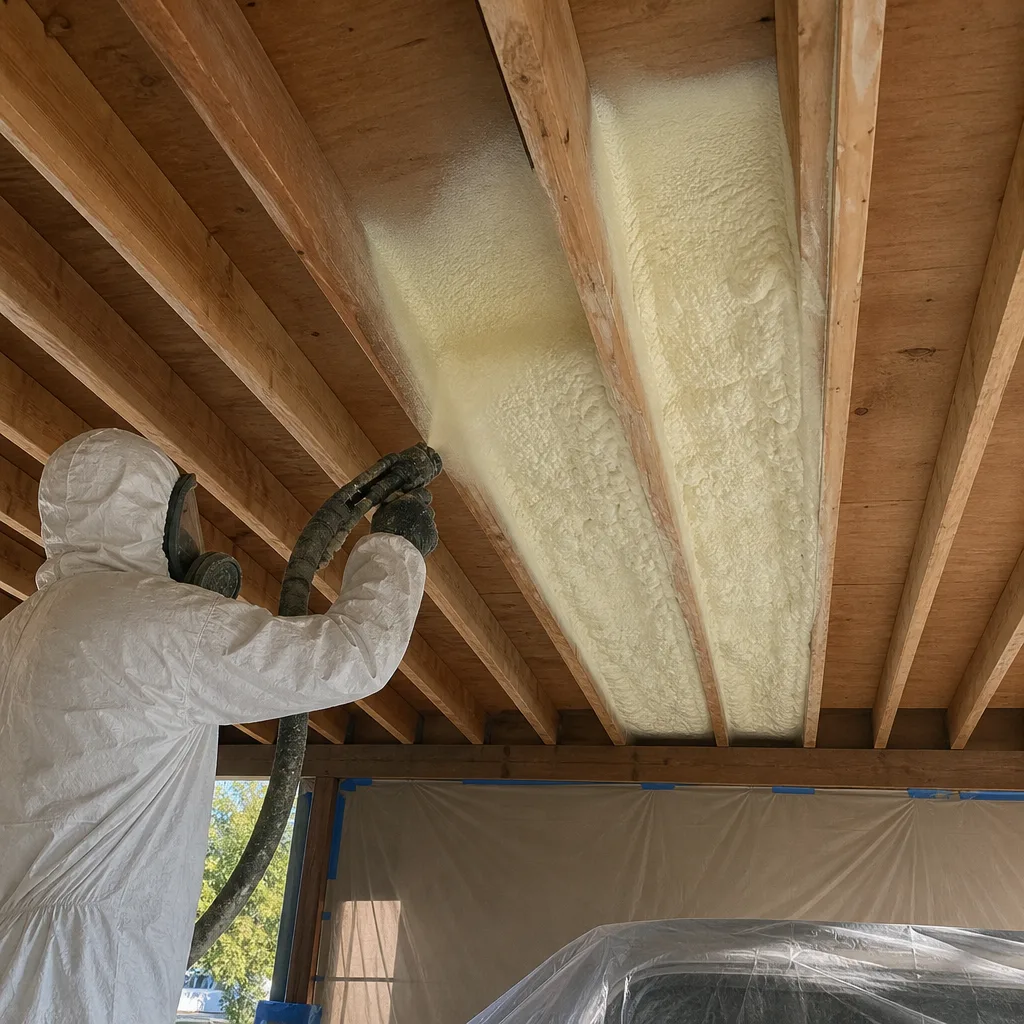
Radiant barrier is a thin, reflective foil material stapled to the underside of your roof rafters. Knauf’s version is a single-layer or double-layer foil over a woven scrim backing, designed to reflect radiant heat back out of the attic before it soaks into your insulation below. In Orange County’s summer climate, where attic temperatures regularly hit 140°F between June and October, a functioning radiant barrier takes real load off your air conditioner. A failed one quietly lets that heat pour in while your AC runs harder every afternoon.
Which Knauf Models This Applies To
Knauf manufactures radiant barrier under their Insulation product line, and it’s available in two main configurations: a single-sided foil and a double-sided foil (foil on both faces, which we recommend for Orange County because it sheds heat from the roof deck above and reflects body heat from the living space below). The material comes in 26-inch and 50-inch wide rolls, with the 26-inch width sized to fit standard rafter bays and the 50-inch width used for open-framing or large gable areas.
If you already have a Knauf radiant barrier in your attic and you’re trying to identify which version you have, look at the printed label near the roll edge. Knauf stamps their product name and a production code along the foil face every few feet. If the label is gone, you can identify a double-sided foil by its shiny silver surface on both sides; single-sided has foil on one face and a fiber or scrim backing on the other.
One compatibility gotcha worth knowing: Knauf radiant barrier is specifically engineered to pair with Knauf insulation products in the same attic, but it is by no means exclusive. You can install it over any blown-in or batt insulation without issue. What matters is proper attic ventilation. Radiant barrier reflects heat, but it doesn’t create airflow, and in Orange County attics with existing moisture problems, covering the rafters without addressing ventilation can trap humidity. We always check that before we staple anything up.
This page covers Knauf’s radiant barrier specifically. We do also stock Reflectix-branded radiant barrier for owners who prefer that product line, and either one installs the same way in most attics.
Signs Your Knauf Radiant Barrier Installation Is Failing
- Upstairs rooms run 5-8°F hotter than downstairs in summer. When radiant barrier tears or sags, it stops reflecting heat before it reaches the attic insulation. The result is a second floor that never cools down on July afternoons, even with the AC running full blast.
- Foil is hanging down from the rafters in strips or sheets. The staples holding radiant barrier in place work loose over time, especially in Orange County’s dry heat, which causes rafter wood to shrink and the staple holes to widen. Gravity does the rest, and the barrier falls away from the roof deck.
- Visible dust or debris sitting on top of the foil. Radiant barrier loses performance when the reflective surface gets coated in dust. In an attic with loose-fill insulation that was disturbed, fine particles settle onto the foil and dull its reflectivity, cutting effectiveness by 15-30%.
- Tears, punctures, or rodent damage in the foil face. Rats and mice in Orange County attics chew through radiant barrier to get to nesting space behind it. A single large tear doesn’t ruin the whole system, but clusters of punctures in the sun-exposed sections do.
- Attic temperature readings above 130°F on an 85°F day. A functioning radiant barrier knocks 15-25°F off peak attic temperature. If you’ve checked with a thermometer and the attic is staying hot on mild days, the barrier has likely failed in the sections facing the afternoon sun, which in Orange County means the south and west roof slopes.
Replacement Cost & What’s Included
Installed Knauf radiant barrier in Orange County currently runs between $1.85 and $3.10 per square foot. On a typical 1,800-square-foot single-story home, that’s roughly $1,500 to $2,400. On larger two-story homes with steep roof pitches, expect $2,400 to $3,200. The range comes down to three things: roof pitch (steeper means slower, more careful work), attic access (crawl hatches, low clearance, or ductwork in the way all add time), and whether we’re removing old, failed material first.
Every quote includes the Knauf radiant barrier material, all staples and fasteners, removal and disposal of failed material if present, and the labor to staple the new barrier across the full rafter face of your attic. The price we put in writing is the price you pay – no added fees for ladder setup, no surprise charges for difficult access. Every install is covered by our 365-Day Done Right Promise in writing, which covers both labor and materials for a full year. If the barrier sags, tears, or fails within that window, we come back and fix it at no charge.
DIY or Call Us?
Radiant barrier installation is one of the safer attic projects a homeowner can attempt, which we’ll say plainly. The material is lightweight foil, not fiberglass, and you’re not dealing with electrical lines or gas in most attics. What makes it unpleasant is the working conditions: Orange County attics in summer reach temperatures that will drain you in twenty minutes, and most attics force you to work on your knees or back across joists while reaching overhead. If you’ve done attic work before and your roof has a gentle pitch, you can rent a staple gun and take this on.
Where DIY goes wrong is coverage. The barrier only works if it’s stapled tightly, continuously, and in the right orientation, which means getting it flat against every rafter bay without gaps at the eaves and ridge. A sagging or poorly fastened barrier loses most of its effectiveness, and you won’t know until your electric bill tells you. If you’d rather have it done right the first time with a price in writing and a name and photo of your technician sent before we arrive, call (559) 249-4794 and ask for a free estimate.
FAQs
In Orange County attics, Knauf radiant barrier lasts 15 to 20 years when properly stapled and kept free of major dust buildup. The foil itself doesn’t degrade quickly, but the staples work loose and sagging begins in the 10-15 year range. If your attic has rodent activity, lifespan drops significantly. Call (559) 249-4794 and we’ll assess your current barrier and tell you honestly whether it needs replacing or just a section repair.
Yes, small tears and isolated sagging sections can be repaired in most cases. We patch torn foil with matching Knauf material and re-staple loose sections. Full replacement only makes sense when the damage covers more than 40% of the rafter face, or when the original install was done incorrectly to begin with. Estimates are free, and the price we quote is what you pay.
A typical Orange County attic takes 4 to 6 hours for a full radiant barrier install, and most jobs are completed same day. Larger homes with steep roofs or low-clearance attics may take two days. You’ll know the timeline before we start because it’s in the written estimate.
Yes, we keep Knauf radiant barrier rolls in both 26-inch and 50-inch widths stocked on our trucks, so we don’t need to order material after inspecting your attic. In most cases, we can measure, quote, and install in a single visit.
Get a Knauf Radiant Barrier Install in Orange County
If your attic barrier has failed or you’re building out a home that needs one before summer hits, call Aspen Attic Insulation Orange County at (559) 249-4794 for a free, written estimate. Garrett Sloane and our crew have been working attics across Orange County for years, and we’ll tell you what your attic actually needs, not what we’re trying to sell. Every job gets a written price before work begins, and every install is covered by the 365-Day Done Right Promise. If your attic is working against you, your AC never wins.
Written by Garrett Sloane, Owner, Aspen Attic Insulation Orange County at Aspen Attic Insulation Orange County, serving Orange County and nearby areas.