
Knauf Crawl Space Encapsulation: The Orange County Owner’s Guide
If you’re searching for Knauf crawl space encapsulation in Orange County, here’s what you need to know right now: we stock Knauf-compatible encapsulation materials and install them throughout Orange County, with most full encapsulations running between $4,500 and $9,800 depending on square footage and access. Same-week scheduling is typical for us, not a special favor. Most homeowners find this page because they noticed a musty smell that won’t quit, sagging vapor barrier material, or a humidity reading above 60% in the crawl space even after running a dehumidifier.
Knauf’s encapsulation line is workhorse material. It’s not the flashiest product on the shelf, but it holds up to Southern California’s specific challenge: we don’t get the flooding other regions do, but our marine layer and clay-heavy soil push moisture up through the ground from late spring through early fall. That constant wicking action is what eventually breaks down vapor barriers that weren’t spec’d for this climate. In Orange County, we see Knauf barriers failing at the seams first, especially in older tract homes in Fullerton and Anaheim where the crawl space was never conditioned and the original 6-mil poly has long since given up.
Key takeaways:
- We work with Knauf encapsulation systems and stock common replacement components on our trucks.
- Typical installed price in Orange County: $4,500 – $9,800 for full encapsulation; partial repairs start around $1,200.
- Every job gets a written price before work begins and a 365-Day Done Right Promise backing the install.
- The name and photo of your technician is sent to you before the visit, every time.
Which Knauf Models This Applies To
Knauf’s crawl space encapsulation line includes the EcoBatt and Jet Stream series insulation, plus their SmartSeal vapor barrier materials running from 6-mil up to 20-mil reinforced liners. The most common Knauf encapsulation products we replace in Orange County are the 10-mil and 12-mil SmartSeal vapor barriers and Knauf’s perforated radiant barrier when it’s been used incorrectly in a humid crawl space. If you’re not sure which Knauf product is installed in your crawl space, look for the printed edge marking on any exposed barrier material. Every Knauf roll carries a batch code printed along the edge, usually in black ink, that includes the product series and the roll width.
Here’s a compatibility gotcha most homeowners won’t know: Knauf’s SmartSeal barrier uses a specific polyethylene blend that does not take standard vinyl repair tape well. We’ve seen DIY patches peel within weeks because the homeowner grabbed whatever tape was on the shelf at a big-box store. The adhesive bond fails against the SmartSeal surface chemistry. If you’re considering OEM Knauf replacement material versus a quality aftermarket equivalent, the honest answer is that both can work, but the aftermarket option needs to match the permeability rating of the original barrier or you’re changing the moisture dynamic of the whole crawl space. A 10-mil barrier from another manufacturer with a lower perm rating than Knauf’s will trap more moisture against your floor joists, not less.
Aspen Attic Insulation Orange County is an independent service provider and is not affiliated with Knauf. We stock Knauf products because they’re reliable and widely specified across Orange County homes, not because we’re tied to the brand.
Signs Your Knauf Crawl Space Encapsulation Is Failing
- Musty odor upstairs that gets worse at night. This is usually the first sign. Moisture is wicking through a tear or seam failure in the barrier, raising crawl space humidity, and the smell rises through your floor assembly while you sleep.
- Sagging or puddled barrier material. When the Knauf liner shows pools of water or droops between support piers, the ground moisture load has exceeded what the barrier can shed. In Orange County’s clay soil zones, this is common in Santa Ana and Garden Grove homes built on expanded clay that swells with moisture.
- Visible mold staining on floor joists or subfloor. Black or gray staining on the wood above your crawl space means humidity has been running high for months. The barrier is no longer doing its job, and the joists are paying for it.
- Insulation falling from between floor joists. If Knauf EcoBatt insulation is drooping or falling out, moisture has saturated the fiberglass and broken down its binder. Wet insulation loses R-value fast and adds dead weight to your floor assembly.
- Pest activity increases. Rats and mice chew through vapor barriers to reach moisture and soil. Once a Knauf barrier has a few rodent holes, the encapsulation is compromised and needs patching with the right material, not just any plastic sheet.
Replacement Cost & What’s Included
In Orange County, Knauf crawl space encapsulation replacement or full install runs between $4,500 and $9,800 for a typical 1,200 to 2,200 square foot home. Smaller partial repairs, like replacing a failed section of SmartSeal barrier or re-taping separated seams, start around $1,200. The range depends on access height, how much old material needs to be removed, whether insulation replacement is involved, and whether you’re adding a dehumidifier or sump pump to the system.
This is parts-plus-labor in one written price. You’ll know what the Knauf material costs, what the labor costs, and what the warranty covers before anyone starts work. No post-job surprise invoice. Every install is covered by our 365-Day Done Right Promise, which covers labor and materials in writing for a full year. If the repair fails within that year, the second visit is free. That’s the standard, not an upsell. Garrett Sloane and our crew have been doing this long enough to know that a crawl space job done wrong shows up again within months, and we’d rather get it right the first time than schedule a callback.
DIY or Call Us?
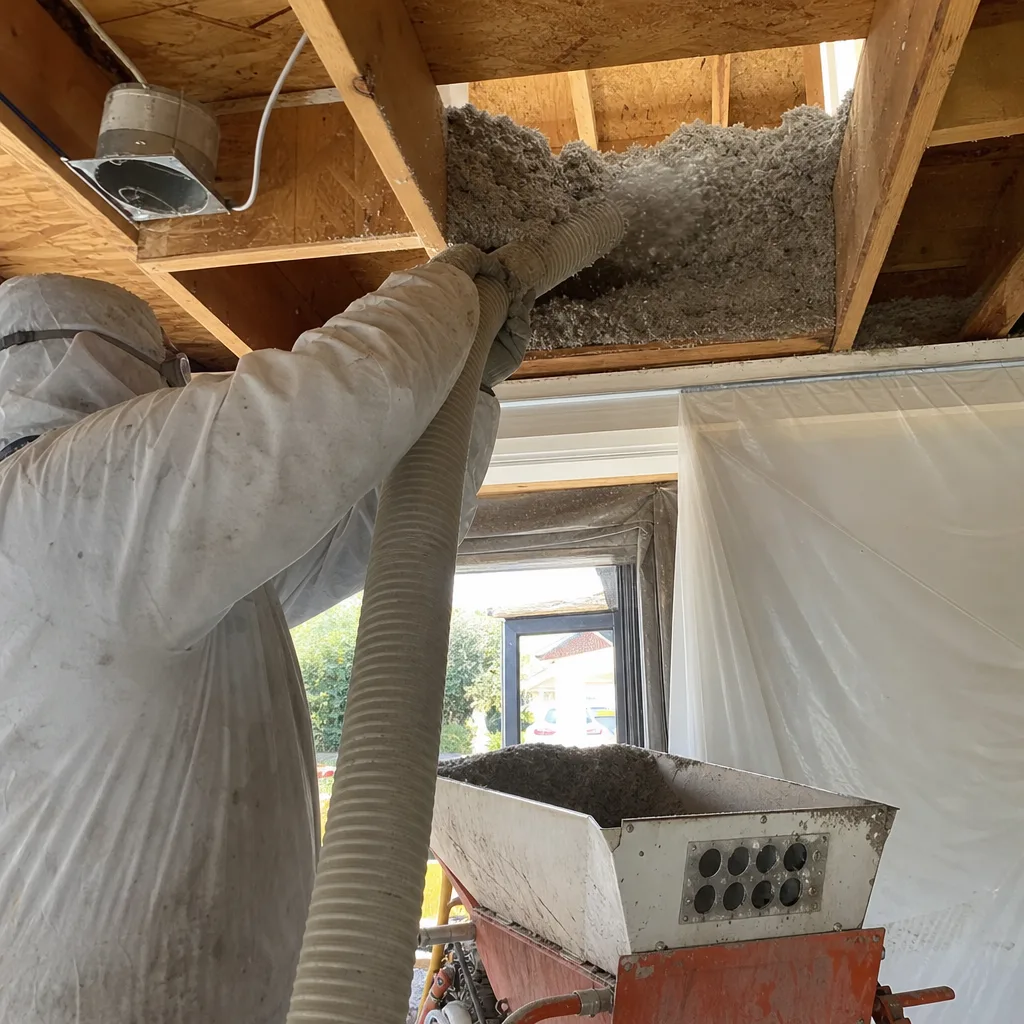
Here’s the honest split. An Orange County homeowner can safely do a few things: check your Knauf barrier for visible tears, look for standing water, and note whether the barrier extends up the foundation walls by at least six inches. You can check these things without special tools and without risk. What you should not do is attempt to re-seal Knauf SmartSeal seams yourself, cut and install barrier material in a confined crawl space without proper vapor protection, or disturb insulation that has been sitting wet for months. Wet fiberglass releases fibers and whatever biological growth has taken hold in it. A crawl space with moisture problems also concentrates whatever gases are in the soil, which is another reason this is not a weekend project. We wear respirators and full disposable suits for a reason.
If you’ve spotted a failing barrier and want a straight answer about whether it needs a patch or a full replacement, call us at (559) 249-4794. We’ll give you an honest assessment, in writing, before any work starts. If your attic is working against you, your AC never wins. Same logic applies under the house: if your crawl space is fighting your floor, your comfort never wins either.
FAQs
A properly installed Knauf encapsulation system in Orange County typically lasts 15 to 25 years. The lifespan depends on whether the barrier is reinforced, whether the crawl space vents were sealed correctly, and whether groundwater is being managed. Our marine layer climate reduces UV exposure, which is good, but our clay soil and dense developments in areas like Irvine and Costa Mesa mean water has fewer places to go, so the barrier works harder. If you’re getting less than a decade from a Knauf barrier, the original install likely had flaws.
Yes, if the damage is seam separation or a small puncture, a targeted repair using the correct Knauf-compatible seam tape is often enough. We repair what’s repairable and replace what’s not. Call (559) 249-4794 and we’ll tell you which one you have before quoting anything.
A full Knauf crawl space encapsulation in Orange County takes one to two working days for a typical home. If we’re also replacing insulation or installing a dehumidifier, add a day. Partial barrier replacement is usually a half-day job.
We stock common Knauf SmartSeal barrier rolls, seam tape, and related encapsulation components on our trucks. If your project needs a specific Knauf product we don’t have on hand, we source it through our supplier network quickly because Knauf is one of eight premium brands we keep relationships with, alongside Owens Corning, Johns Manville, Rockwool, CertainTeed, Icynene, Demilec, GreenFiber, and Reflectix for specialty reflective applications.
If your crawl space is damp, musty, or showing signs of failing encapsulation, call (559) 249-4794 for a free estimate. We’ll show up on time, with a name and a face you already know, and a written price before anything happens to your house.
Written by Garrett Sloane, Owner, Aspen Attic Insulation Orange County at Aspen Attic Insulation Orange County, serving Orange County and nearby areas.