
Icynene Attic Air Sealing: The Orange County Owner’s Guide
We stock and install Icynene-compatible attic air sealing throughout Orange County, with typical installed pricing running $1,200 to $3,400 depending on attic square footage and how much of the existing seal has degraded. Same-day and next-day appointments are available in most OC zip codes, and every job gets a written price before we touch anything.
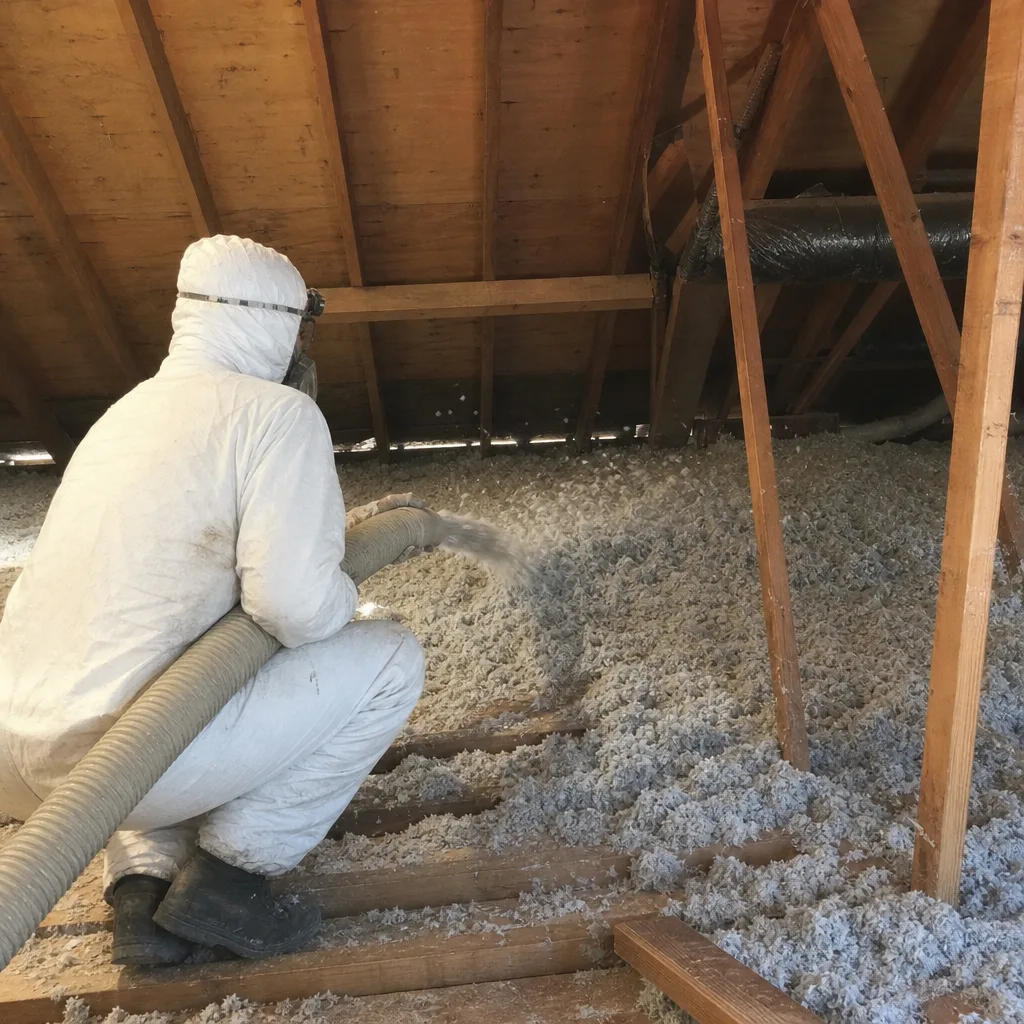
Most homeowners discover their Icynene air seal has failed the hard way: a bedroom that won’t hold temperature in August, a spike in the Edison bill that doesn’t match the weather, or dust settling on stored boxes within weeks of cleaning. The spray foam itself rarely “goes bad” all at once. What fails is the integrity of the seal at the joints, penetrations, and edges where shifting roof decking has pulled foam away from framing.
If you’re noticing your upstairs runs 8 to 10 degrees warmer than your thermostat setting while the AC runs constantly, your Icynene seal has likely opened up somewhere in the attic. That’s what this page is for.
Which Icynene Models This Applies To
Most Orange County homes with Icynene attic sealing have one of three product families: Icynene Classic (open-cell, low-density, usually installed between 2003 and 2012), Icynene ProSeal (closed-cell, higher R-value per inch, common in newer OC builds), or Icynene Lite (open-cell with a faster cure window, often used in tight attic retrofits). The compatibility question matters because open-cell and closed-cell foams age differently and require different repair approaches.
If you still have the original paperwork, the product name is on the invoice. No paperwork? Pop your head into the attic and look at the foam itself. Open-cell Icynene is soft, light beige or pale yellow, and you can press a finger into it. Closed-cell ProSeal is rigid, denser, and usually a deeper yellow or amber. That single observation tells us which repair path we’re taking before we even get on a ladder.
On the OEM-vs-aftermarket question: Icynene does not sell direct to homeowners, and “genuine Icynene” repair kits sold online are almost always repackaged generic foam with an inflated sticker. For open-cell repairs, we stock Demilec Sealection 500 and Johns Manville Corbond as compatible open-cell equivalents. For closed-cell, we carry Demilec Heatlok HFO. These are professional-grade materials, not can foam, and they bond correctly with existing Icynene substrate. Using the wrong chemistry (like big-box single-component cans from Home Depot) is the most common reason a DIY repair fails within one season.
We also stock Reflectix radiant-barrier tape and underlayment for homes that combine Icynene with a radiant barrier in the roof assembly.
Signs Your Icynene Attic Air Sealing Is Failing
- Uneven room temperatures on the second floor. One bedroom is fine, and the room next to it runs 7 degrees hotter or colder. That’s almost always a failed seal at a specific penetration, like a can light or an exhaust fan, not a system-wide HVAC problem.
- Attic smells drifting into living space. You shouldn’t smell the attic from your hallway. When you can, the air seal has opened somewhere between the attic floor and the ceiling below, and conditioned air is now mixing with attic air.
- Dust accumulation on ceiling fan blades and high shelves within weeks of cleaning. Attic dust enters through gaps. If the seal is intact, attic particulates stay in the attic. If you’re dusting monthly and the dust is gritty and gray, that’s attic air moving in.
- Cold drafts near recessed lights in winter. Can lights are the single most common failure point in Icynene-sealed OC attics. The foam shrinks back slightly from the can housing over years of heat cycling, and the gap opens an inch or so.
- Foam pulling away from roof decking or rafters. Visible shrinkage gaps of more than a quarter inch at any seam, joint, or penetration mean the continuous air barrier is broken. In Orange County summers, attic temps above 140°F accelerate this at a rate most Connecticut Icynene installers never deal with.
Replacement Cost & What’s Included
In Orange County, a targeted Icynene air-seal repair on a typical 1,800 to 2,400 square foot single-story home runs $850 to $1,900. A full attic re-seal, where we remove failed sections, prep the substrate, and reapply foam across the full thermal envelope, falls between $2,200 and $3,400 for most OC homes. Attics with vaulted ceilings or complex rooflines run higher because access is slower.
The price includes a pre-work attic inspection, removal of loose or failed foam in the repair zone, substrate prep, new foam application, and a post-job thermal camera verification pass. Labor and materials are both covered under the 365-Day Done Right Promise, in writing. If the repair fails within a year, we come back and fix it at no charge. No restocking fees, no “diagnostic fee” on the second visit.
We give you the written price before any work starts, and it doesn’t change after the fact. That’s not a marketing line; it’s policy. You’ll know the number before we bring a single tool inside.
DIY or Call Us?
What you can safely do from the attic access panel: look for visible gaps where foam has pulled back from framing, check for signs of rodent activity (which destroys Icynene edges), and take photos with your phone. That costs you ten minutes and helps us quote more accurately over the phone.
What you should not do: apply spray-foam kits from a big-box store to open-cell Icynene. The chemistry doesn’t match, the expansion rate is wrong, and the result is usually a hardened crust over a still-leaking gap. We see three or four of these botched repairs a year in Orange County, and the cleanup costs more than if we’d done it right the first time. If the attic is hot, tight, and you’re on your own, climbing around with foam and a respirator is a bad afternoon waiting to happen.
Call (559) 249-4794 and we’ll walk through what you’re seeing. If it’s not worth a service call yet, we’ll tell you that too. Garrett has told more than a few Orange County homeowners to wait a year, and they call us back when it’s time. That’s how we keep the phone ringing.
FAQs
Icynene attic air sealing typically lasts 15 to 25 years in Orange County before edge shrinkage at penetrations becomes noticeable, though attic temperatures regularly reaching 140°F in places like Irvine, Tustin, and Fullerton can pull that toward the shorter end for open-cell products. Closed-cell ProSeal generally holds its seal longer because the denser foam resists thermal movement better. Call (559) 249-4794 if you’re seeing gaps, and we’ll tell you whether you’re looking at normal aging or an early failure.
Most failing Icynene attic air sealing in Orange County can be repaired with targeted re-foaming at the failed seams, penetrations, and edges, and full removal is rarely necessary if the foam is dry and intact across the field. We quote the repair scope honestly, and if your attic only needs a partial fix, that’s what we’ll tell you. Call (559) 249-4794 for a free assessment, and you’ll get a written price before any work starts.
A targeted Icynene attic air sealing repair in Orange County typically takes 3 to 5 hours on site, and most homeowners have us in and out the same day. Larger full re-seals can run a full day or a day and a half depending on attic access and roofline complexity. Call (559) 249-4794 and we’ll give you a time window before we show up, plus the name and photo of the tech who’ll be at your door.
Yes, our Orange County trucks carry Demilec and Johns Manville open-cell and closed-cell foam that bonds correctly with existing Icynene substrate, so most same-day repairs don’t require a second trip or a parts order. We also stock Reflectix radiant barrier materials for homes that layer the two products. Call (559) 249-4794 to confirm stock for your specific Icynene model before scheduling.
Written by Garrett Sloane, Owner, Aspen Attic Insulation Orange County at Aspen Attic Insulation Orange County, serving Orange County and nearby areas.