
Last updated October 16, 2026
Seasonal Insulation Care for Orange County: Year-Round Homeowner’s Guide
Most seasonal home guides tell Orange County homeowners to “check insulation before winter.” Here’s the problem with that advice: by November, the damage from summer heat has already settled into your attic. The inspection that actually saves money happens in May, before the cooling season cranks up and your AC starts fighting a losing battle against a superheated attic. Orange County doesn’t operate on a traditional four-season calendar. It runs on two insulation seasons: the June-through-October cooling grind, and the November-through-February marine layer stretch that introduces a condensation cycle most homeowners never see until it’s already ruined their insulation. This guide walks through exactly what to do, month by month, so your attic insulation works harder and lasts longer in Orange County’s specific climate.
Quick Answer
Seasonal insulation care in Orange County means running two focused inspections each year: one in May before peak cooling demand, and one in October before the marine layer and brief cool season set in. The May check focuses on airflow, heat damage, and AC duct integrity. The October check focuses on moisture, pest entry points, and wind damage from Santa Ana events. Between those two windows, the only other task is monitoring after heavy marine layer mornings or Santa Ana wind events, then calling a professional when you spot moisture staining, shifted material, or a sudden spike in your cooling bill.
Table of Contents
- The May Inspection Protocol: What to Check Before Cooling Season
- June Gloom and Attic Moisture: The Condensation Cycle That Ruins Insulation
- June Through October: The Cooling Season Grind
- October Pest Check: Why Rats and Mice Target Your Attic When Orange County Cools Down
- Santa Ana Wind Season: Securing Loose-Fill Before High-Pressure Events
- November Through February: The Marine Layer Months
- Month-by-Month Insulation Calendar for Orange County
- Common Mistakes to Avoid
- When to Call a Professional
- Frequently Asked Questions
- The Bottom Line
The May Inspection Protocol: What to Check Before Cooling Season
May is the single most important month for Orange County insulation maintenance, and it’s the one most homeowners skip. Here’s why: your attic has just spent eight months absorbing whatever the climate threw at it, and it’s about to be asked to hold back 110-degree heat for five straight months. You want to find problems now, when outside temperatures are still mild and repairs are fast, not in August when a failed section of insulation is costing you $40 a day in wasted cooling.
A proper May inspection covers four specific areas:
- Check airflow from soffit to ridge. Walk the attic perimeter and confirm the soffit vents aren’t blocked by insulation that’s been pushed to the edges. In Orange County’s older ranch-style homes, we regularly see blown-in material packed tight against the eaves because a previous installer didn’t use baffles. That traps heat against the roof deck and cooks your insulation from the top down. The fix is usually simple: install or reposition vent baffles so air moves from the soffit, up under the roof deck, and out the ridge or gable vents.
- Look for heat-triggered settling. Blown-in fiberglass and cellulose settle naturally over time, especially after a hot summer. If your attic floor was insulated to R-30 a few years ago and the material has compacted, you may only have effective R-20 coverage now. Bring a tape measure. In most of Orange County, you want at least 10 to 14 inches of blown-in fiberglass, or 8 to 10 inches of cellulose, depending on the product and your home’s ceiling framing.
- Inspect the AC duct runs, not just the insulation itself. Duct leaks in a hot attic are the hidden tax on Orange County cooling bills. If the foil tape at duct joints is peeling or the duct insulation has gaps, cooled air is leaking into a 130-degree attic before it ever reaches your living room. That’s not an insulation failure on its own, but it’s the same thermal envelope, and it’s exactly what to look for in May.
- Check the attic access hatch seal. The pull-down ladder or access panel in your hallway ceiling is a gap in your thermal boundary. If it’s not insulated and weatherstripped, it’s the equivalent of leaving a window open all summer. In a county where cooling season runs five months, that single panel can cost hundreds of dollars a year.
If you’d rather not climb into a 120-degree attic in late May with a tape measure, that’s reasonable. Attic insulation in Orange County is something we inspect every day, and a professional assessment takes about an hour. The May window is the cheapest time of year to catch issues, because you’re not paying emergency pricing and the fix is small instead of catastrophic.
June Gloom and Attic Moisture: The Condensation Cycle That Ruins Insulation
June Gloom isn’t just a weather pattern that ruins beach days. It’s an attic moisture problem that slowly degrades certain types of insulation, and most Orange County homeowners never connect the dots. Here’s how the cycle works: overnight and through the morning, the marine layer pushes cool, damp air ashore. That moisture finds its way into your attic through vents and small gaps. By early afternoon, the sun burns through, the attic heats up fast, and that trapped moisture condenses on cooler surfaces, especially kraft-faced batts.
The kraft paper facing on fiberglass batts is a vapor retarder, not a vapor barrier. When it gets repeatedly damp and then hot, two things happen. First, the paper loses its integrity and starts to separate from the insulation, which reduces its effectiveness. Second, the staple tabs that hold the batts in place against the joists corrode and fail, and the batts sag or drop. In a worst case, sustained moisture leads to mold on the kraft paper, and at that point the material is beyond saving.
What should you actually do during June Gloom season? Three things:
- Check for visible moisture staining on the underside of the roof deck. Early morning or on an overcast day, look for dark streaks or water marks on the plywood or OSB. Those tell you condensation is happening.
- Listen to your attic on humid mornings. If you hear dripping when your AC is off and it hasn’t rained, that’s condensation, not a roof leak.
- Check the facing on fiberglass batts for crumpling or separation. Kraft-faced batts that are pulling away from the framing are no longer doing their job.
The long-term fix for marine layer moisture is controlled ventilation, not more insulation. You need enough airflow to carry moisture out before it condenses. In Orange County attics that suffer through June Gloom year after year, we often recommend switching to unfaced blown-in insulation in Orange County when the old batts have failed, because loose-fill fiberglass or cellulose handles humidity without a paper facing that degrades. It’s not the only option, but it’s the one that holds up best in coastal-influenced microclimates.
June Through October: The Cooling Season Grind
From June through October, your attic insulation has one job: keep the heat out. In inland Orange County, cities like Anaheim, Orange, and Yorba Linda routinely see attic temperatures above 140 degrees in July and August, and that heat wants to migrate down into your living space. If your insulation is doing its job, the temperature at your ceiling should stay close to your indoor air temperature. If it’s not, you’ll feel it: hot spots in rooms that face west, an AC that runs all afternoon and still can’t hold 78, and a power bill that climbs every month of the summer.
The cooling season is not the time for big insulation projects. Attics are dangerously hot, and working in them is miserable and risky. What you should do during this stretch is monitor, not maintain. Here’s what to watch for:
- Hot ceilings in the late afternoon. Place your hand flat on the ceiling in a west-facing room at 5 p.m. If it feels warmer than the air in the room, your attic insulation is either inadequate or unevenly distributed.
- Uneven room temperatures. If one bedroom is consistently five degrees warmer than the rest of the house, that’s usually an insulation gap above that room, not an AC balancing issue.
- Short cycling on your AC. If the system clicks on and off every few minutes, the problem may be insufficient attic insulation making the house gain heat faster than the AC can remove it.
One thing we’ve learned from two decades in Orange County attics: the homes that struggle most in August are the ones where insulation was installed to a minimum standard and has settled since. Code minimums have changed over the years, and a home insulated to 1980s standards is not prepared for a 2020s summer. If you’re seeing the warning signs above, fall is the time to add material, not summer. Schedule an assessment in October once attic temperatures drop.
October Pest Check: Why Rats and Mice Target Your Attic When Orange County Cools Down
Orange County doesn’t get cold enough to kill off rodents, but it does get cool enough to make your attic the most attractive winter shelter in the neighborhood. October is when roof rats and house mice start looking for warmth and nesting material, and your attic insulation is exactly what they’re after. This matters for your insulation in three specific ways.
First, rodents burrow through and tunnel into insulation, creating air gaps that shortcut your thermal barrier. Second, they nest in it, which means the material gets compacted, soaked with urine, and contaminated with droppings. Third, they chew on the kraft facing of batts and on any accessible wiring, which is a fire hazard and a code concern. Once insulation is contaminated, the fix is removal and replacement, not spot treatment. That’s a much bigger job than sealing an entry point in October.
Your October pest check should cover these steps:
- Walk the exterior of your home and look at every penetration. Where pipes, conduit, or cables enter the house, look for gaps larger than a quarter inch. A rat can squeeze through a hole the size of a quarter. A mouse needs only a dime-sized gap.
- Check the attic vents. Gable vents, soffit vents, and roof vents should have intact screening. Missing or torn screens are an open door.
- Look for droppings along the attic perimeter. Check the top plates of the walls, where the roof meets the exterior walls. That’s the rodent highway.
- Look for greasy rub marks along beams and the underside of the roof deck. Rodents leave a dark, oily residue from their fur as they travel the same paths repeatedly.
If you find signs of rodent activity, address the entry points first, then assess the insulation damage. Sealing gaps with appropriate materials (steel wool plus sealant for small holes, steel mesh or metal flashing for larger openings) is something a homeowner can often do safely with basic tools, as long as you’re working on accessible areas and not climbing on the roof itself. The insulation replacement, if it’s needed, is worth getting a professional opinion on. Rodent-contaminated insulation requires proper removal procedures, including protective equipment, and it’s not a DIY job.
Santa Ana Wind Season: Securing Loose-Fill Before High-Pressure Events
Between October and January, Santa Ana winds howl through Orange County canyons and put real pressure on loose-fill insulation. The physics are straightforward: high-pressure air pushes against the outside of your home, and if you have gaps around attic vents or at the attic perimeter, that pressure finds its way in and moves loose material around like a leaf blower. The result is insulation piled up in one corner of the attic and bare spots in another, usually near the soffit vents where it matters most.
The time to address this is before the first big Santa Ana event, not after. Here’s what we look for in the October through December window:
- Check the edges of the attic floor near soffit vents. Loose-fill fiberglass and cellulose are light, and wind-driven air entering through soffit vents pushes material back from the eaves. That creates a bare strip along the entire attic perimeter, which is exactly where you lose the most heat in winter.
- Verify vent baffles are still in place. Baffles serve two purposes: they keep the ventilation channel open, and they block wind from scouring the insulation near the eaves. If baffles are missing or damaged, replace them in October before the wind season peaks.
- Look for “drift patterns” after a wind event. If you go into the attic after a strong Santa Ana and the insulation looks like drifted snow, that’s wind redistribution. Rake it back to even coverage and address the air leaks that allowed the wind in.
- Secure the attic access panel. The same wind that moves loose-fill around can create a pressure differential that lifts an unsealed attic hatch, letting conditioned air escape and unfiltered attic air enter.
Loose-fill materials like Knauf fiberglass and GreenFiber cellulose perform well in Orange County’s climate, but they need stable edges and intact baffles to stay where they belong. This is the single most overlooked Santa Ana prep item in the county, because most homeowners think about wind damage in terms of trees and fences, not insulation.
November Through February: The Marine Layer Months
Orange County winters are mild by national standards, but they’re not without insulation challenges. The primary winter concern is the consistent overnight marine layer that settles in from November through February, especially in coastal and central county neighborhoods. Combined with cooler indoor temperatures, this creates the same condensation risk as June Gloom, but with a twist: during winter, your home’s interior is often warmer than the outside air at night, which drives moisture up into the attic from below, through gaps in the ceiling plane.
Winter is also the season when you notice insulation problems through different symptoms:
- Cold floors over a vented crawl space. If you have a crawl space with insulation, you’ll notice cold floors in December and January. That’s the time to check the condition of the underfloor insulation from the crawl space access, no attic involved.
- Condensation on ceiling registers or recessed light housings in the morning. This points to warm, moist interior air leaking into the attic and condensing on cold fixtures. The fix is air sealing around the fixtures from the attic side, not more insulation.
- Higher heating bills despite a mild winter. Orange County has short heating seasons, so any meaningful increase in your gas or electric bill during November through February usually means heat is escaping through the ceiling faster than it should be.
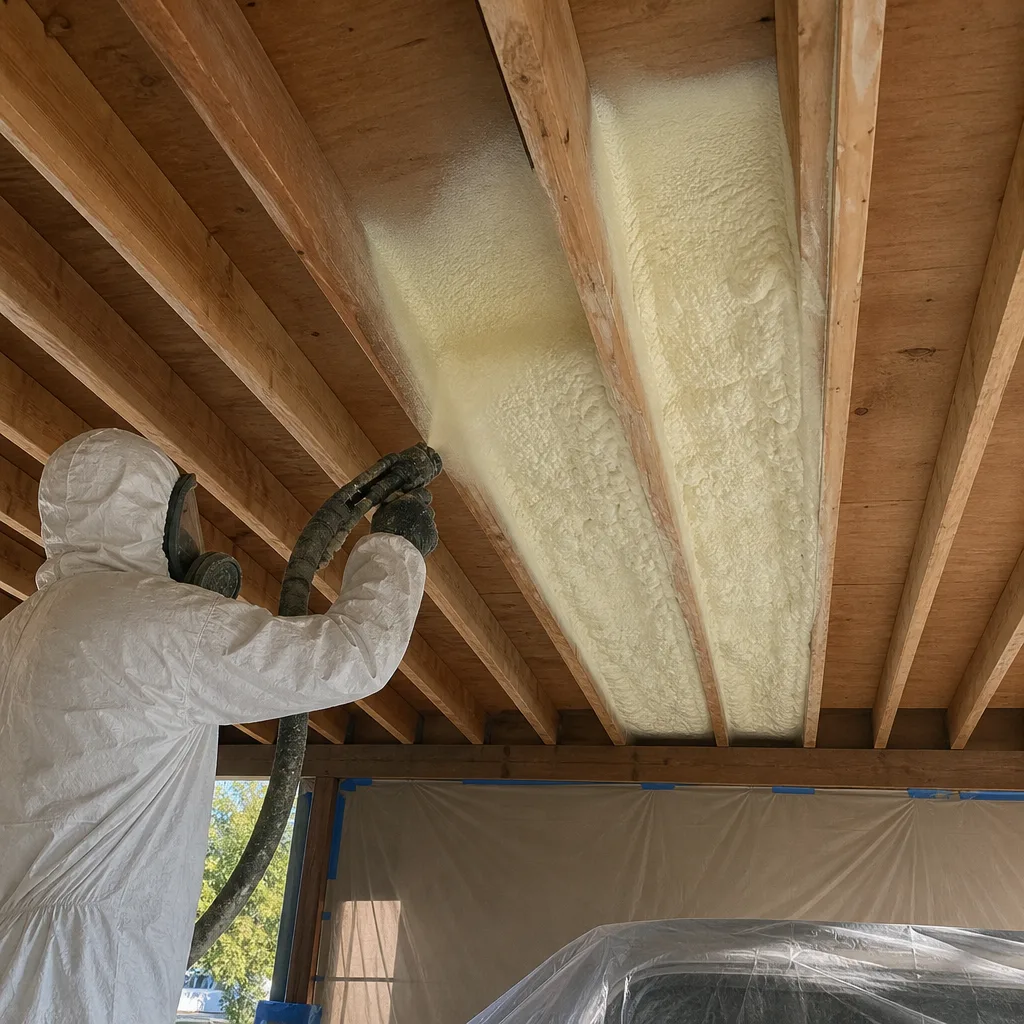
Winter is an excellent time for insulation upgrades in Orange County, for a simple reason: attic temperatures are mild enough to work safely, and the temperature differential makes it easy to see where insulation is missing or thin. If you’ve been putting off an insulation assessment, scheduling it between November and February keeps the work comfortable for the crew and gives you a full picture of what’s going on before the next cooling season begins. Spray foam insulation in Orange County is another option many homeowners consider during this window, especially for hard-to-reach areas or as an air-sealing measure in addition to traditional insulation.
Month-by-Month Insulation Calendar for Orange County
This is the entire year-round maintenance calendar, reduced to one task per month. None of these tasks require specialist tools, and most take less than 20 minutes:
| Month | Task | Why It Matters in Orange County |
|---|---|---|
| January | Check for condensation on ceiling fixtures after cool nights. | Marine layer moisture is at its peak; air leaks become visible as condensation. |
| February | Schedule your insulation assessment if you haven’t had one in 3+ years. | Attic temperatures are mild; mild weather means comfortable working conditions and thorough inspections. |
| March | Check for rodent activity as spring breeding season begins. | Early detection means smaller problems; rat populations expand starting in spring. |
| April | Clear soffit vents of any debris and confirm baffles are in place. | You want full airflow before the first heat wave, which can arrive as early as May. |
| May | Run the full May Inspection Protocol described above. | The single most important month for protecting your cooling budget all summer. |
| June | Monitor for June Gloom moisture; check for water staining on the roof deck. | Condensation season begins; catch it early before batts degrade. |
| July | Track your cooling bill against last July; note hot spots in rooms. | Mid-summer is when insulation failures show up as money leaving your bank account. |
| August | Nothing in the attic; this is monitoring month only. | Attic temps can exceed 140°F; don’t work in that environment. |
| September | Check for any signs of pest activity from summer. | Warm months bring rats looking for cooler attic nesting spots. |
| October | Run the full pest and vent screening check described above. | Last good window before rodent season and Santa Ana winds overlap. |
| November | Check loose-fill edges after the first Santa Ana event. | Wind redistribution shows up immediately after high-pressure events. |
| December | Verify the attic access panel is sealed and insulated. | Winter’s warm interior air leaks through this gap more than any other. |
Print this calendar and stick it inside a kitchen cabinet or garage door. The entire year’s insulation maintenance adds up to less than three hours of attention, and it protects an asset that most Orange County homeowners never think about until it fails.
Common Mistakes to Avoid
- Checking insulation only in November, like a national guide tells you to. By then, the summer damage is done and the cooling bill is spent. Orange County’s real maintenance season is May.
- Blocking soffit vents with insulation to “keep the heat out.” Blocked vents trap heat against the roof deck and rot sheathing from the inside. Ventilation is part of the insulation system, not the opposite of it.
- Thinking more insulation is always better. Adding material without first air sealing the attic floor pushes moist interior air into the new insulation, where it condenses and degrades the material. Air seal first, insulate second.
- Ignoring the attic access panel as if it’s not part of the attic. An uninsulated, unsealed hatch is a hole in your thermal boundary the size of a small window. The fix costs about $30 in materials.
- Treating June Gloom as “just fog.” For homes in coastal Orange County, repeated marine layer exposure degrades kraft-faced batts faster than summer heat does. Check for moisture staining every June and November.
- Not checking rodent entry points after a summer of open vents and crack growth. October is the month, not when you hear scratching in December.
- Working in the attic at 2 p.m. in July “just to check something.” Attic temperatures in Orange County regularly exceed 130 degrees in summer afternoons. That’s heat exhaustion territory. Do your inspections in the morning or in shoulder months.
When to Call a Professional
Most of the tasks in this guide are safe for homeowners to check, but some situations call for a trained set of eyes. If you see dark staining on roof sheathing, sagging kraft-faced batts that have separated from the joists, or rodent droppings throughout the insulation, that’s beyond a weekend project. The same goes for loose-fill that’s been wind-scoured away from large sections of the attic floor, or any situation where you suspect you need to add material but aren’t sure how much or what type. Working with insulation materials involves dealing with fiberglass and cellulose in confined spaces, and a professional has the right respiratory protection, the right tools, and the experience to spot problems a homeowner won’t recognize. If you’re in Orange County and want a free assessment, Aspen Attic Insulation Orange County offers estimates at no charge. Call (559) 249-4794 and we’ll come out, walk through the attic with you, and give you our written recommendation and price before any work starts.
Frequently Asked Questions
Twice a year: once in May before peak cooling season, and once in October before the marine layer and Santa Ana wind season. These two checks cover nearly every insulation failure mode Orange County homeowners will ever encounter. If you’d rather not climb up yourself, many insulation companies in Orange County, including ours, include an attic inspection with a free estimate.
Yes, in coastal and central Orange County, the consistent morning moisture from June Gloom and the winter marine layer causes condensation in attics that degrades kraft-faced fiberglass batts over time. The paper facing loses integrity, staples corrode, and batts sag. If you have kraft-faced batts and live within a few miles of the coast, check for moisture staining every June.
Attic insulation in Orange County typically runs from $1.50 to $3.50 per square foot for blown-in fiberglass or cellulose, depending on the depth, the home’s access, and whether old material needs removal first. Most single-family homes land somewhere between $1,800 and $4,200 all in. Spray foam runs higher per square foot but provides air sealing in addition to insulation. For an exact number on your attic, call (559) 249-4794 for a free written estimate.
It’s almost always cheaper to add insulation on top of existing material if the old insulation is dry, uncontaminated, and free of rodent damage. You can blow additional loose-fill directly over the top, and the new material just adds to the total R-value. Replacement is only necessary when the old insulation is wet, moldy, rodent-contaminated, or compacted beyond usefulness. A professional inspection will tell you which path you’re on.
Yes, with the right precautions. Wear long sleeves, pants, gloves, and a dust mask or respirator. Work in the morning when attic temperatures are lower, and walk only on the ceiling joists, never between them. Never work in the attic when outside temperatures are above 90 degrees, which rules out most Orange County summer afternoons. If any part of that makes you uncomfortable, a professional inspection is the better call.
The best time to upgrade attic insulation in Orange County is November through February, when temperatures are mild, the heating season is short, and you’ll have time to air-seal and address any issues before the next cooling season. Many homeowners schedule an assessment in early winter, get the work done before spring, and walk into summer with a fully upgraded thermal barrier. If you’re thinking about it, winter is your window.
The Bottom Line
Orange County’s insulation calendar is simple: inspect in May before the heat arrives, check again in October before the moisture and wind arrive, and monitor during the months in between. The entire year-round maintenance routine takes about three hours, and it protects an investment that pays for itself every month in the form of lower cooling bills, more even temperatures, and an attic that doesn’t slowly degrade from condensation, pests, or wind. If you’re not sure what you’re looking at, or you find something that doesn’t look right, a professional assessment is the fastest way to get an answer. You can stay on top of this, and your summer power bill in Orange County will thank you.
For more on how we approach Orange County insulation work, see our guides on attic insulation in Orange County, spray foam insulation in Orange County, and blown-in insulation in Orange County. Each one covers a specific material and method in depth.
Written by Garrett Sloane, Owner at Aspen Attic Insulation Orange County, serving Orange County since 2002.