
Icynene Crawl Space Encapsulation: The Orange County Owner’s Guide
Icynene crawl space encapsulation in Orange County typically runs $3.50 to $6.00 per square foot installed, depending on access height, existing vapor barrier condition, and whether we’re sealing rim joists or just the floor and walls. Most jobs in Orange County land between $4,200 and $9,500 for a standard 1,200 to 1,600 square foot crawl space, and we can usually start within the same week. The call usually starts the same way: a homeowner notices a musty smell creeping into the living room, or their energy bill spiked, or they pulled up the access hatch and saw torn foam, sagging liner, or black staining on the joists above.
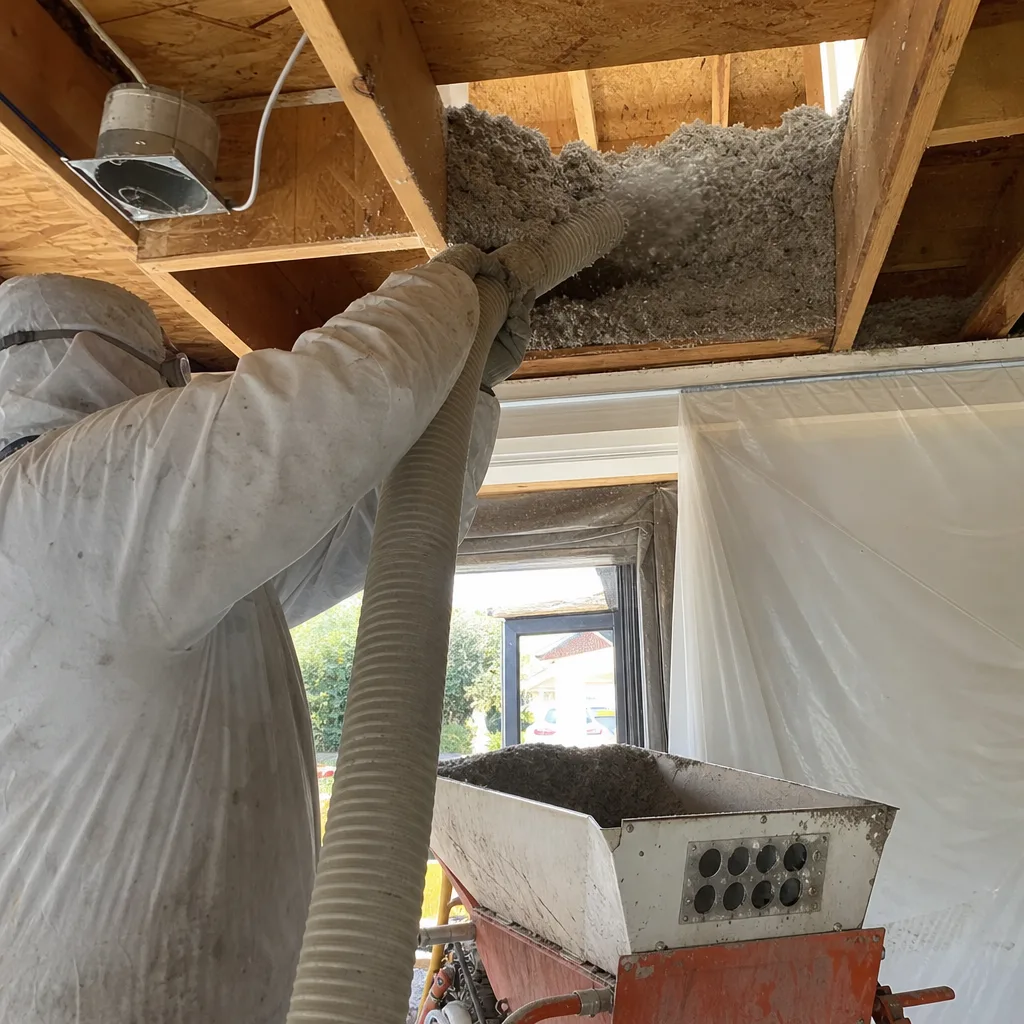
Here’s what matters before you spend a dollar: Icynene’s open-cell spray foam (classic Icynene Classic and the newer Icynene ProSeal) behaves differently than rigid board or simple plastic sheeting. If your home was treated with open-cell Icynene on the crawl space walls and it’s now flaking, peeling, or pulling away from the foundation, the problem is usually moisture migration from the soil, not the foam itself. That’s the single biggest thing to know before you start calling around for quotes.
Key Takeaways
- Icynene open-cell foam can absorb moisture if the original installer skipped a proper vapor barrier underneath it, meaning the “failed foam” is often a failed moisture-control system as a whole.
- Orange County’s marine layer means crawl spaces in Huntington Beach, Costa Mesa, and Newport see condensation even in July, which accelerates liner and foam breakdown.
- We stock Icynene-compatible sealants, tapes, and liner materials on our trucks, and we can match your existing encapsulation setup without ripping out healthy foam for no reason.
- Written price before work begins, every time. No exceptions.
Which Icynene Models This Applies To
Icynene’s crawl space applications fall into two broad families: the older open-cell Classic and Classic Max formulas, and the newer ProSeal closed-cell line. In Orange County, the older open-cell formulas are what we see failing most often, and for predictable reasons. Open-cell foam is breathable by design. It’s an air barrier, not a moisture barrier. If the crawl space floor was never sealed with a proper 10-mil or thicker vapor barrier before the foam went on, those foam walls become a sponge. Six or seven years of Orange County humidity cycles later, the foam starts pulling away from the foundation, crumbling at the edges, and you get exactly the mess our crew finds in houses from Anaheim to Mission Viejo.
The compatibility gotcha most homeowners miss: not every Icynene-branded product is the same chemistry. ProSeal is closed-cell, rigid, and does not absorb water the way Classic does. If your failing foam is open-cell and you replace it with ProSeal, great, but you still have to address the ground moisture first or the new foam will eventually fail too. We’ll verify what’s actually installed before we quote, because the label on your warranty card doesn’t always match what’s on the foundation wall after a previous contractor’s patch job.
On the OEM-versus-aftermarket question for Icynene: the foam itself is the OEM product, but the liner, tapes, and sealants around it are largely interchangeable if you choose quality equivalents. We use Icynene-compatible and Icynene-spec materials, and we also stock Reflectix radiant barrier for crawl space ceiling applications where reflectivity helps more than additional R-value. For most Orange County homes, the real decision isn’t which foam brand to use. It’s whether the crawl space’s moisture control system is designed correctly from the dirt up.
Signs Your Icynene Crawl Space Encapsulation Is Failing
- Musty smell upstairs that gets worse after rain. This is almost always a vapor barrier breach. The smell means soil moisture is reaching the crawl space air, and your HVAC return is pulling that air into the house. The Icynene foam on the walls may be fine, but if the floor liner is torn or the rim joist seal is peeling, the whole system leaks.
- Foam pulling away from the foundation walls. Open-cell Icynene that stays wet through repeated condensation cycles loses its mechanical adhesion. You’ll see gaps at the top of the foam line, crumbling edges, or foam that has turned brown and spongy. In Fullerton and Placentia, where older homes often have shorter crawl space heights, water pooling near footings accelerates this.
- Visible black or green staining on floor joists. This is mold growth, and it tells you the encapsulation is not preventing moisture migration. The Icynene wall foam doesn’t stop moisture that rises through the dirt floor if the floor barrier is below the foam line or was never installed. The fix is usually liner replacement plus joist treatment, not replacing the wall foam.
- Higher summer cooling bills with no other explanation. A failed crawl space encapsulation means your air conditioner is fighting humid air from below. When the crawl space envelope leaks, the subfloor insulation gets wet and loses R-value. The unit works harder, and Orange County summers make that pain visible on the utility bill fast.
- Condensation on ducts or plumbing lines in the crawl space. Cold duct surfaces sweating in a vented or semi-sealed crawl space means the air under the house is carrying too much moisture. The encapsulation line has failed somewhere. Even a small rim joist gap in a beach-adjacent city like Laguna Niguel can pump in enough humid air to cause that sweat.
Replacement Cost & What’s Included
In Orange County, a full crawl space encapsulation repair or replacement on a standard single-story home typically runs from $4,200 to $9,500, and here’s the honest breakdown of why the range is that wide. If we’re just replacing a torn liner and re-sealing rim joists, you’re looking at the lower end, around $2.50 to $3.50 per square foot. If the open-cell Icynene wall foam has failed and must be removed and replaced, plus new liner, plus sealing and taping, that’s the upper end. Access height matters more than most people expect: a crawl space with 24 inches of clearance versus one with 40 inches changes labor time dramatically.
Every quote we write in Orange County includes materials, labor, disposal of failed material, and what we call the post-installation walkthrough where we show you exactly what we sealed and why. You get that price in writing before we start, and it doesn’t change unless we both agree in writing to a change. The 365-Day Done Right Promise covers the replacement in full for one year. If something on that repair fails within 365 days, the second visit is free. That’s in writing, covering labor and materials.
DIY or Call Us?
Here’s the straight answer. You can safely check your crawl space access point, shine a light on the liner, and look for obvious signs: standing water, torn plastic, foam peeling off the walls. That’s a homeowner-level inspection, and we encourage every Orange County resident to do it once a year. The DIY line ends at the actual repair. Crawl space encapsulation materials are heavy, the spaces are confined, and installing a liner correctly means lapping seams in the right direction, sealing around every pier and plumbing penetrations, and fastening the liner mechanically, not just draping it. If it’s not installed tight and sealed right, you’ve spent a weekend and a thousand dollars on materials for a system that still leaks.
Open-cell Icynene removal, in particular, is not a weekend job. It needs to be cut out, the substrate checked for mold, and any moisture source corrected before new material goes in. We handle that daily, and our techs arrive with the truck stocked for the job. If you’re in Orange County and you want the work done once, call us at (559) 249-4794 and we’ll give you a written price after a crawl space inspection, no charge for the assessment.
FAQs
Properly installed Icynene encapsulation typically lasts 15 to 25 years in Orange County, but open-cell foam applied without a correct ground vapor barrier can start failing in 5 to 8 years because of coastal humidity cycles. The liner and tapes may need replacement sooner than the foam itself. If your system is failing well before a decade, the original moisture barrier was almost certainly the weak point. Call (559) 249-4794 for an honest assessment of what’s actually under your house.
It depends on what’s failed. Torn floor liner, separated tape joints, and small rim joist gaps can usually be repaired without touching healthy wall foam, which saves you a lot of money. If the Icynene itself is saturated or crumbling, that section typically needs removal and replacement. We’ll tell you exactly what’s repairable and what’s not, and you’ll see the written price for each option before you choose.
Most Orange County replacements take one to two working days, depending on square footage, access height, and whether we’re removing failed open-cell foam or working around existing ductwork and plumbing. Smaller liner-only repairs can often be completed in a single day. We schedule a walkthrough at the end so you see what was done.
Yes. Our trucks carry Icynene-compatible sealants, tapes, liner materials, and related hardware so we don’t have to make a parts run mid-job on most Orange County replacements. If the job requires a specific product we don’t have on hand, we order it and schedule the install once it arrives, with the price locked in writing before we start.
Written by Garrett Sloane, Owner, Aspen Attic Insulation Orange County at Aspen Attic Insulation Orange County, serving Orange County and nearby areas.