
Rockwool Radiant Barrier Installation: The Orange County Owner’s Guide
Rockwool radiant barrier installation in Orange County typically runs $1.85 to $3.25 per square foot installed, with most single-story homes landing between $1,900 and $4,800 depending on attic size and access. We stock Rockwool-compatible radiant barrier materials on our trucks and can usually get your installation scheduled within 48 to 72 hours. Most Orange County homeowners discover theirs has failed when they notice a bedroom that’s suddenly 10 degrees hotter than the hallway, or an AC unit that runs all afternoon without cycling off.
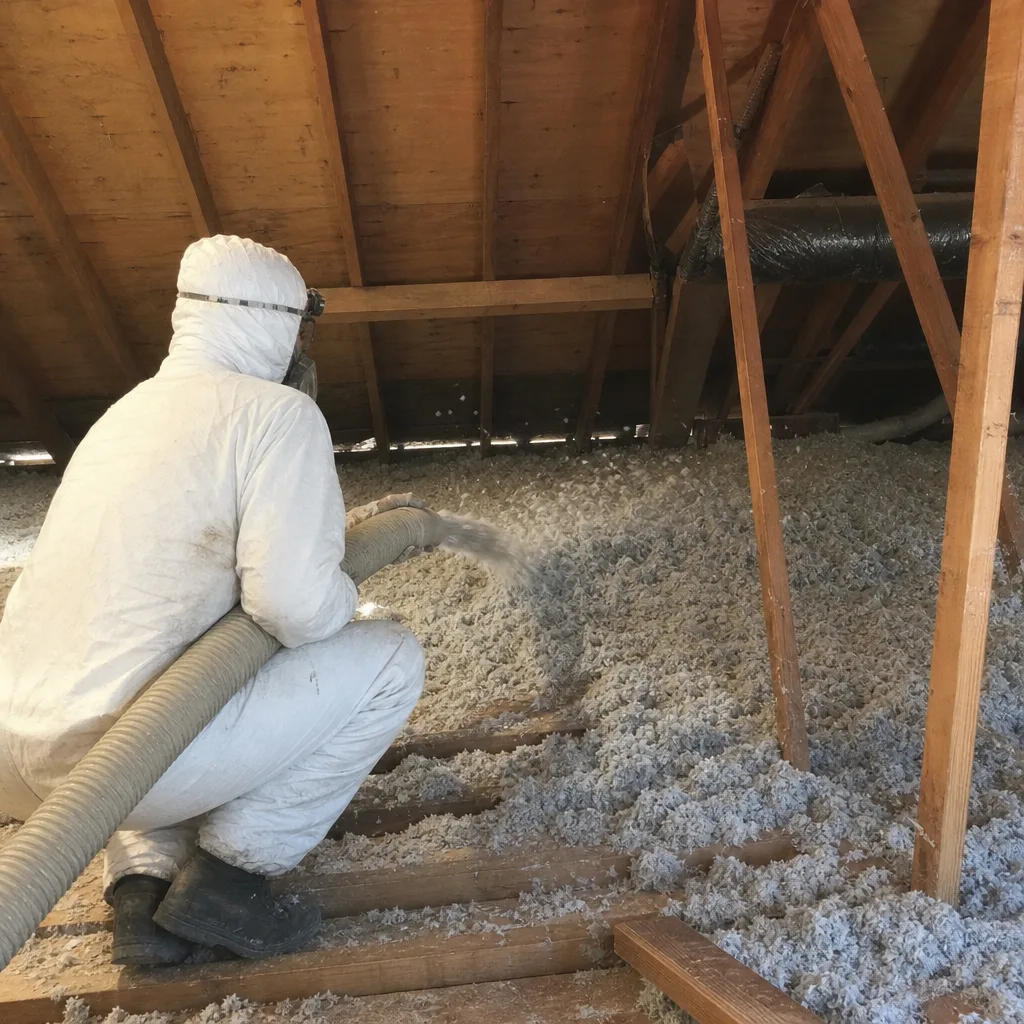
Here’s what you actually need to know: radiant barrier is a reflective layer that bounces radiant heat away from your attic floor. It’s not insulation in the traditional sense. It works alongside your Rockwool batts or blown-in insulation, not instead of it. When the barrier tears, delaminates, or gets buried under dust and blown-in material, it stops reflecting. Your attic gets hotter. Your ductwork absorbs more heat. Your AC works harder. In Orange County’s inland heat, from Anaheim Hills to Rancho Santa Margarita, that adds up fast on your July bill.
We’re an independent Orange County insulation contractor, not affiliated with Rockwool. That matters because we install what’s right for your house, not what a single brand wants pushed.
Which Rockwool Models This Applies To
Radiant barrier pairs with any Rockwool product, but the installation approach changes depending on what’s already in your attic. If you have Rockwool Comfortbatt or Safe’n’Sound batts between your joists, the radiant barrier gets stapled to the underside of your roof rafters, leaving the required air gap between the barrier and the roof deck. If you have Rockwool blown-in loose fill on the attic floor, the barrier goes on the rafters the same way, but we’re careful not to let material drift down and bury the blown-in layer. A buried barrier is a dead barrier.
The compatibility gotcha most Orange County homeowners never hear about: Rockwool batts are denser than fiberglass and hold their shape against roof decking better, which means the air gap between your barrier and the roof sheathing matters more, not less. If that ¾-inch minimum gap gets pinched, you lose the reflective benefit almost entirely. We measure that gap on every joist bay before we staple anything, because an older Orange County home with true 2×4 rafters can differ from a 1990s tract build in Irvine by half an inch or more.
On the OEM versus aftermarket question: Rockwool does not manufacture radiant barrier. The barrier itself is a separate product, usually a perforated aluminum foil laminated to a scrim or kraft backing, available from brands like Reflectix and others we stock. So the “OEM” conversation is really about matching the barrier’s perm rating and perforation to your existing ventilation setup. A non-perforated barrier in an attic that needs to breathe will trap moisture against your roof deck. In Orange County’s coastal humidity cycles, from San Clemente mornings to inland dry afternoons, that’s asking for sheathing rot. We match perforation to your attic’s venting, not just whatever roll is already on the truck.
Signs Your Rockwool Radiant Barrier Installation Is Failing
- Uneven room temperatures in the afternoon. Radiant barrier works hardest between 2 and 6 p.m. when your roof deck bakes. If upstairs rooms facing west or south spike while north-facing rooms stay comfortable, the barrier has likely separated or torn at the staple lines. Heat is getting through in one section and your AC can’t keep up in that zone.
- Your AC runs constantly on mild days. A functioning radiant barrier drops attic temperatures 20 to 30 degrees. If your attic feels like a wall of heat when you pop the hatch on a 78-degree Orange County day, the barrier isn’t reflecting. That heat loads your ductwork, and your system runs longer just to hold a setpoint.
- Visible sagging or peel-back at the seams. Staple pullout is the most common failure we see, especially in older Orange County homes with tongue-and-groove roof decking. The wood dries out over decades, staples lose grip, and the barrier wrinkles away from the rafter. A wrinkle isn’t cosmetic. It creates a convection channel that defeats the reflective surface.
- Dust or blown-in insulation covering the foil. Radiant barrier only reflects when the foil face stays clean and exposed. If rock wool blown-in material has drifted over the barrier, or if decades of Orange County dust have coated it, reflectivity drops sharply. We see this a lot in homes where the original barrier was stapled directly to the attic floor, which was common practice in the 1990s but is wrong for exactly this reason.
- Moisture staining on the attic side of the foil. If your barrier shows water spots or mildew streaking, your attic’s ventilation is out of balance and the barrier is trapping moisture against the roof sheathing. This is the failure that matters most, because it’s not just your comfort, it’s your roof’s structural life. In Orange County’s marine layer mornings and hot inland afternoons, condensation cycles are relentless.
Replacement Cost & What’s Included
A full Rockwool-compatible radiant barrier installation in Orange County runs $1.85 to $3.25 per square foot installed. That includes removal of the failed barrier, inspection of your existing Rockwool insulation, barrier material matched to your attic’s ventilation, and cleanup. A typical 1,200-square-foot attic in a Rancho Cucamonga or Orange tract home lands around $2,200 to $3,900.
What drives the range: attic access (pull-down stairs are cheaper than a cramped scuttle hole), roof pitch, how much of the old barrier needs pulling down, and whether your existing Rockwool batts are in good shape or need spot replacement. We give you a written price before any work starts, and that’s the price. No surprise line items at the end of the day.
Every installation is covered by the 365-Day Done Right Promise. If there’s a problem with your barrier installation within a year, we fix it. It’s in writing, covering both labor and materials, and if something fails, we’re back in your attic at no charge.
DIY or Call Us?
Radiant barrier installation doesn’t carry the same danger level as garage door springs or wiring, but it’s still attic work in Orange County heat. A July attic can hit 140 degrees. You’re working overhead with staple guns, kneeling on joists, and if you slip, you’re going through the drywall. That’s the honest risk. Working with reflective foil also means dealing with edges sharp enough to cut hands, and staple pullout in old wood is frustrating even for experienced installers.
What you can safely do: check your attic hatch for heat buildup, look for visible sagging or tears from the access point, and take note of which rooms run hot. That helps us quote accurately over the phone. What we’d rather you not do: crawl across your own joists on a 95-degree Orange County afternoon with a staple gun and a roll of foil. Between the heat, the balance risk, and the ventilation specs that are genuinely easy to get wrong, it’s one of those jobs where professional installation pays for itself. Call us at (559) 249-4794 and we’ll give you an honest assessment. If your attic doesn’t need the work yet, we’ll tell you that too. Garrett Sloane would rather tell you to wait than sell you something that won’t help.
FAQs
Radiant barrier typically lasts 15 to 25 years in Orange County conditions, though staple pullout and dust accumulation in inland areas can cut that shorter. Coastal homes with consistent humidity may see faster degradation of the backing material. If your attic runs hot and the barrier is over 15 years old, it’s worth an inspection. Call (559) 249-4794 and we’ll check it while we’re quoting, no obligation.
Yes, if the failure is localized to one or two sagging sections or torn seams, we can re-staple and patch the affected area, which typically costs $250 to $600 depending on attic access. But if you’ve got widespread staple pullout, dust-coating, or moisture staining, patching is wasted money. We’ll show you photos from your own attic before recommending full replacement.
Most Orange County radiant barrier installations are completed in a single day, typically 4 to 7 hours depending on attic size and whether old barrier needs removal. We send you the technician’s name and photo before the visit, and they arrive in a clean marked uniform with a photo ID badge at the door. If anyone else shows up, the visit is free and we make it right.
Yes, we stock perforated and non-perforated radiant barrier rolls from multiple brands, including Reflectix, on our service trucks. This means most jobs are completed same-visit without a follow-up trip. We also carry Rockwool batts and blown-in material from eight industry brands: Owens Corning, Johns Manville, Knauf, Rockwool, CertainTeed, Icynene, Demilec, and GreenFiber. If your insulation needs attention while we’re up there, we can handle it same day.
If your attic is working against you, your AC never wins. Call us at (559) 249-4794 for a free estimate and a written price before any work starts. A live person answers, 24/7, no voicemail loop.
Written by Garrett Sloane, Owner, Aspen Attic Insulation Orange County at Aspen Attic Insulation Orange County, serving Orange County and nearby areas.