
How Much Does Crawl Space Encapsulation & Vapor Barrier Cost in Orange County?
Crawl space encapsulation and vapor barrier installation in Orange County typically costs between $3,500 and $16,500 in 2026, with most single-family homes in areas like Irvine, Huntington Beach, and Anaheim falling in the $5,000 to $9,000 range. A basic 12-mil vapor barrier over a 1,200-square-foot crawl space runs $1,800 to $4,200, while full encapsulation with drainage matting, sealed vents, and a dehumidifier pushes the total higher. The final number depends on square footage, crawl space height, current moisture levels, and whether you’re adding insulation to the subfloor at the same time.
This guide breaks down exactly what you’ll pay in Orange County, what drives the cost up or down, and what to expect from the work itself. Keep reading for real numbers you won’t find on a generic national cost site.
Crawl Space Encapsulation & Vapor Barrier Cost Breakdown (2026)
Orange County pricing runs higher than the national average for two reasons: older housing stock with tight crawl space access in places like Santa Ana and Fullerton, and coastal humidity that makes moisture control a year-round concern, not a seasonal one. Here’s what we see on actual bids across the county this year.
| Line Item | Typical Range (Orange County, 2026) |
|---|---|
| 12-mil vapor barrier only (1,000 – 1,500 sq ft) | $1,800 – $3,500 |
| 16-mil or 20-mil reinforced barrier | $2,500 – $5,000 |
| Full encapsulation (barrier + sealed vents + foam board on walls) | $5,500 – $12,000 |
| Encapsulation with dehumidifier | $7,000 – $16,500 |
| Crawl space insulation (fiberglass batts or spray foam on subfloor) | $1,200 – $4,500 |
| Sump pump installation (if standing water is present) | $1,500 – $3,500 |
| Drainage matting or French drain (perimeter) | $2,000 – $6,000 |
These numbers reflect what Orange County contractors actually charge in 2026, not national averages. A 1,000-square-foot crawl space in Mission Viejo with moderate moisture and no standing water will land near the bottom of these ranges. The same home in a low-lying area of Westminster or Garden Grove with drainage issues and a cramped 18-inch crawl space will hit the top.
Labor accounts for 55% to 65% of the total. Crawl space work is physically demanding, requires respirators and protective gear, and moves slowly when headroom is tight. Materials make up the rest, and the gap between a 12-mil and 20-mil barrier matters less than people assume. The real cost driver is scope: sealing vents, wrapping piers, and conditioning the space changes the job from a liner install to a full system.
What Affects Crawl Space Encapsulation & Vapor Barrier Pricing in Orange County
Every crawl space is different, and so is every bid. These are the factors moving your number up or down the most in Orange County specifically.
- Square footage and crawl space layout: A 1,200-square-foot crawl space with open, uniform access costs less than an 800-square-foot space split into four low-clearance sections. Older Orange County homes from the 1950s and 1960s, common in Orange and Tustin, often have irregular layouts with plumbing and ductwork to work around, which adds labor hours.
- Crawl space height: Clearance of 36 inches or more lets a technician work faster. Many Orange County homes have 18 to 24 inches, which slows every part of the job. If the space is under 18 inches, expect to pay a premium, or consider having the floor partially excavated first.
- Moisture and mold conditions: A dry, well-ventilated crawl space needs little prep. A crawl space with visible mold, saturated wood, or standing water needs remediation before any barrier goes down. Botrytis and Cladosporium are the two we see most often in Orange County crawl spaces, and both need professional treatment, usually $800 to $2,500 depending on surface area.
- Sealing method and materials: A basic 12-mil polyethylene sheet pinned to the floor and piers costs far less than full encapsulation. Full encapsulation means sealing every vent, running barrier up the foundation walls, taping every seam, and often adding rigid foam board to the perimeter. The barrier material itself, 12-mil vs 20-mil, is a small part of the price difference; the labor and scope are what separate them.
- Standing water or drainage problems: If the crawl space floods after heavy rain, a vapor barrier alone won’t solve it. You’ll need a sump pump, perimeter drain, or both. Homes in low-lying parts of Seal Beach and Huntington Beach face this more than homes on higher ground in Yorba Linda or Anaheim Hills.
- Access to the crawl space: Exterior access hatches are common in Orange County ranch homes and keep the crew out of your living space. Interior access through a closet floor means more cleanup, more floor protection, and a slightly higher labor charge.
One thing that does not affect price in Orange County: seasonality. Crawl space work happens year-round here, so you won’t get a winter discount the way you might for exterior painting or roofing. Some companies run slower months around the holidays, but the honest pricing difference is minimal.
How to Save on Crawl Space Encapsulation & Vapor Barrier
You don’t have to overpay, and you also don’t want to underpay and end up redoing the work. Here’s how to get the project done right without wasting money.
- Get at least three written bids. Prices for the same scope of work in Orange County can vary by 40% or more. Ask each contractor for a line-item breakdown so you can compare labor, materials, and prep work directly.
- Bundle the project with insulation. If you’re already opening the crawl space for a vapor barrier, adding subfloor insulation or sealing ductwork at the same time costs less than doing them as separate jobs. Aspen Attic Insulation Orange County frequently handles crawl space barriers alongside attic insulation work, which reduces mobilization and setup charges.
- Fix the water source first. If your gutter downspouts drain against the foundation or the yard slopes toward the house, correcting those issues before encapsulation prevents you from paying for remediation later. A $300 downspout extension is cheaper than a second encapsulation visit.
- Ask about moisture testing. A reputable contractor will measure relative humidity and wood moisture content before recommending full encapsulation. If your crawl space moisture is borderline, a vapor barrier plus vent sealing may be enough. Testing takes 20 minutes and should be free with your estimate. Call (559) 249-4794 and we’ll do exactly that.
- Know the difference between barrier only and full encapsulation. Quote-shopping is harder when two bids describe different scopes. A $3,000 bid for a liner is not cheaper than a $7,000 bid for full encapsulation; it’s a different job. Ask specifically what’s included: vent sealing, foundation wall coverage, pier wrapping, and a dehumidifier.
One more thing worth knowing: Orange County has no county-level permit requirement for crawl space vapor barrier installation when no structural changes are involved. Some cities, including Newport Beach and Laguna Beach, have their own building codes, and if the work includes adding a sump pump with new electrical, a permit may be required. A contractor who knows these local rules, rather than a generalist working across five counties, will keep you compliant without padding the estimate.
Is Crawl Space Encapsulation Worth It in Orange County?
In most Orange County homes, yes. Here’s the practical payback.
Crawl space moisture feeds three problems at once: musty odors that find their way into living spaces, higher indoor humidity that makes air conditioning work harder, and wood rot that quietly degrades floor joists and subflooring. Homes in coastal cities like Costa Mesa, Newport Beach, and San Clemente deal with marine-layer humidity pushing moisture into crawl spaces even on sunny days. Encapsulation cuts that moisture at the source.
Homeowners who fully encapsulate and add a dehumidifier typically see indoor humidity drop 10 to 20 points, which means the AC runs less to maintain comfort. On a typical 2,000-square-foot Orange County home, that translates to roughly 10% to 15% lower summer cooling bills. The crawl space insulation benefit matters too: a sealed crawl space keeps the floor above it warmer in winter, which matters more in inland cities like Brea and La Habra where nighttime temps dip lower than the coast.
For resale, a fully encapsulated crawl space with documentation is a selling point. Buyers in this market ask about moisture, mold, and previous water damage; a clean, conditioned crawl space with a written warranty removes a common objection.
What to Expect During Crawl Space Encapsulation
The work itself is straightforward but disruptive for a day or two. Here’s what the process looks like when a qualified Orange County crew does it right.
First, the crawl space gets inspected. The technician measures moisture levels, documents standing water, checks joists and subflooring for rot, and maps the space. You get a written plan and a written price before any work begins. If anyone skips this step and starts throwing down plastic, that’s a red flag.
Next comes prep. If mold is present, it gets treated and killed. If water is pooling, a sump pump or drainage correction goes in first. Then the barrier itself: heavy mil polyethylene sheeting laid across the floor, run up the foundation walls, wrapped around piers, and sealed at every seam with specialty tape. In full encapsulation, every vent gets sealed with rigid foam or an airtight cap, and the perimeter walls receive foam board insulation.
Most crawl space encapsulation jobs in Orange County take one to three days. A 1,000-square-foot space with good access is usually a one-day job for a two-person crew. Add mold remediation or drainage work and you’re looking at two to three days.
After the work is done, the crew should walk you through what was installed, show you the seams and seals, and provide a written warranty covering both labor and materials.
That last part matters more than most homeowners realize. A vapor barrier that fails at a seam or pulls away from a wall undoes the whole project. That’s why we put the 365-Day Done Right Promise in writing on every job. If something isn’t right within a full year, we come back and make it right, free, including a second visit at no charge if a repair fails. That promise covers labor and materials, and it’s in writing before work starts.
Who Should You Hire for Crawl Space Work in Orange County?
Crawl space work sits at an uncomfortable intersection: you’re letting someone into your home, into the space under your floors, and you’re paying them thousands of dollars. The wrong hire is expensive in more ways than one.
Here’s what to look for, and what we hold ourselves to.
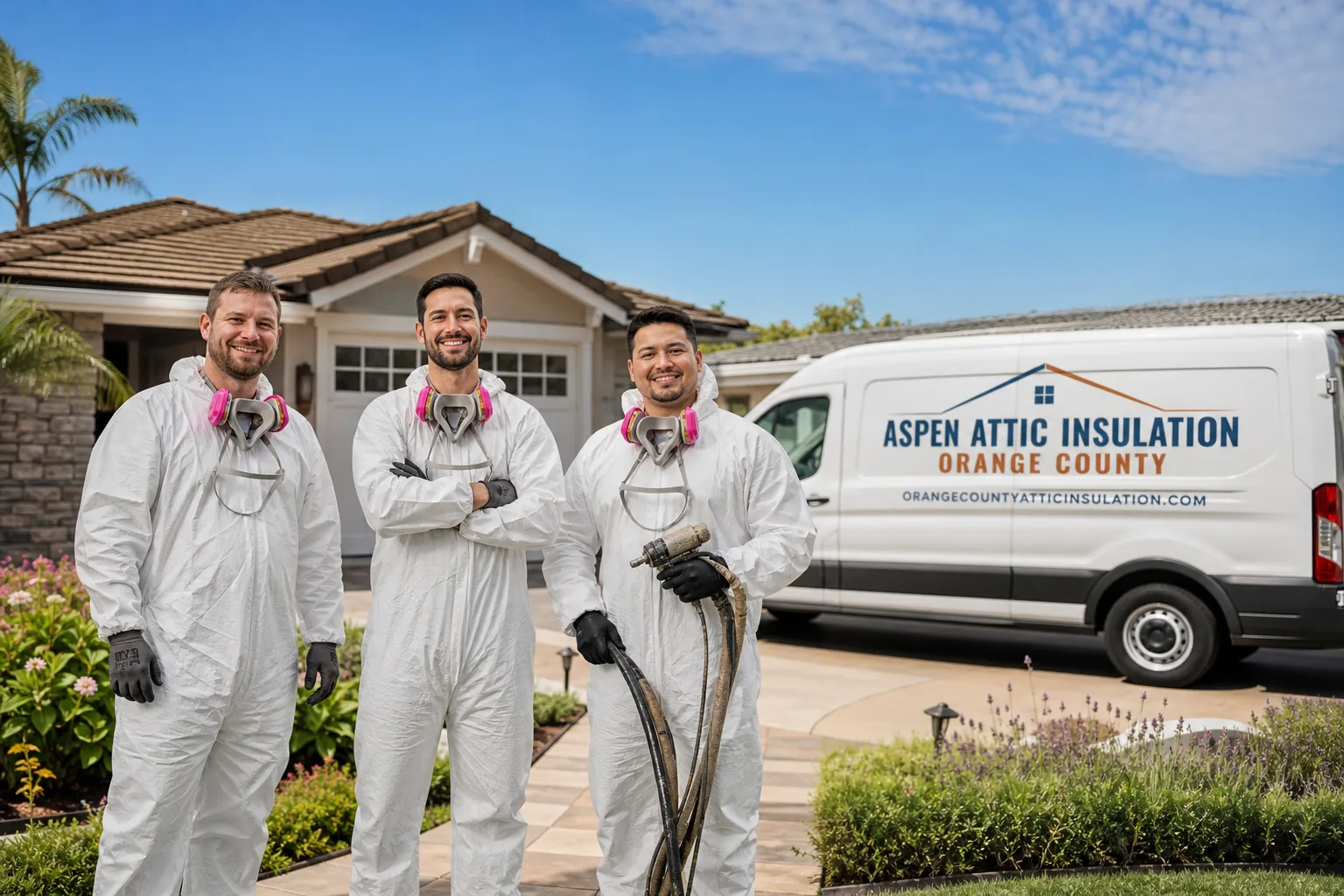
First, know who’s coming. Before any Aspen Attic Insulation Orange County technician arrives at your door, you receive their name and photo. Every tech is background-checked and identity-verified as part of the Threshold Standard, the verification and conduct protocol we’ve operated under since our founding in 2002 as part of the Threshold Group family. When they show up, they’re in a clean, marked uniform and they carry a photo ID badge. If someone other than the named technician arrives, the visit is free and we make it right.
Second, get the price in writing first. Not a verbal estimate, not a range with a wink, but a written price with the scope of work clearly listed. That’s how we operate on every job, no exceptions. The price you sign is the price you pay.
Third, confirm the warranty is real. A guarantee is only as good as the company behind it and whether it’s written down. Our 365-day guarantee is in writing on every job and covers both labor and materials.
The licensing question is easier in California than in most states: crawl space encapsulation contractors need a valid California contractor’s license (General B or C-54 for insulation and related work). Ask to see it. A licensed contractor is bonded and insured, which protects you if something goes wrong.
As an insulation specialist, we approach encapsulation from the home-performance side. That means we’re looking at how the crawl space interacts with your attic, your HVAC, and your indoor air. That’s why our crawl space encapsulation and vapor barrier service in Orange County includes a full assessment of the home’s insulation envelope, not just the crawl space in isolation.
FAQs – Crawl Space Encapsulation & Vapor Barrier Cost
How much does a crawl space vapor barrier cost per square foot in Orange County?
In Orange County, a 12-mil vapor barrier runs $1.50 to $3.50 per square foot installed, while 20-mil reinforced crawl space vapor barrier with sealed seams runs $2.50 to $5.00 per square foot. Full encapsulation, which includes wall coverage, vent sealing, and pier wrapping, runs $5 to $11 per square foot. For an exact number on your specific crawl space, call (559) 249-4794 for a free estimate.
Does crawl space encapsulation increase home value in Orange County?
Yes, a documented, professionally installed encapsulation system typically returns 70% to 90% of its cost at resale in Orange County, and it removes a common buyer objection about moisture and mold. The bigger financial benefit is ongoing: lower cooling bills and avoided structural repairs from rot. A $7,000 encapsulation that prevents a $15,000 joist replacement pays for itself.
What does a full crawl space encapsulation include?
A full encapsulation includes a heavy vapor barrier on the floor, barrier run up the foundation walls and wrapped around piers, every vent sealed airtight, all seams taped, and usually a dehumidifier sized to the space. In Orange County, full encapsulation runs $5,500 to $16,500 depending on square footage, access, and moisture conditions.
Does crawl space encapsulation lower energy bills in Orange County?
Yes, most Orange County homeowners see a 10% to 15% reduction in summer cooling costs after full encapsulation, because the home’s HVAC system no longer fights the humid air rising from the crawl space. The biggest savings come in coastal and central county areas where the marine layer keeps crawl space humidity elevated for months at a time.
Can I install a vapor barrier myself to save money?
This is one job where the materials are forgiving but the details are unforgiving. That said, a basic 12-mil liner over a clean, dry crawl space floor is a project a physically capable homeowner can complete for $800 to $1,500 in materials, or $2,000 to $4,000 less than hiring it out. The catch: improperly sealed seams and edge gaps will trap moisture against your floor joists and make the problem worse. Plus, working in a confined crawl space carries real risks, including fungal exposure and sharp debris. Full encapsulation, vent sealing, and any mold or standing water remediation should go to a trained professional.
Ready to Get a Real Number for Your Crawl Space?
You’ve read the ranges and what drives them. The next step is getting a written price for your specific Orange County home. Call (559) 249-4794 and Aspen Attic Insulation Orange County will schedule a free moisture assessment and written estimate. Garrett Sloane and our team will measure your crawl space, document the moisture levels, and hand you a line-item price before any work starts. If it’s not done right, the 365-Day Done Right Promise covers it in writing, with a free second visit if a repair fails. No surprise bills, no strangers at the door. Just a name, a photo, and a price in writing.
Pricing reflects the Orange County market as of 2026. Aspen Attic Insulation Orange County offers free estimates – call (559) 249-4794.
Written by Garrett Sloane, Owner at Aspen Attic Insulation Orange County, serving Orange County since 2002.
What Our Customers Say
"Great job. They were running behind by about an hour, but the crew was careful and called ahead."
- Maya R."Attic hatch got an insulated cover and weatherstrip too. Small thing, big difference."
- Pam J."Removed the old matted insulation and sealed the air leaks around the can lights before putting in new. Utility bill dropped the very next month."
- Larry O.